12 Gauge
- 5 shops compared
- Direct shop links
- No account needed
Price history
Compare 0 offers
Prices last updated Mon, Jun 15
Prices and availability are provided by the retailers and may change. We do our best to keep them current, but always confirm the final price at the store before purchasing.
No offers available right now.
Overview
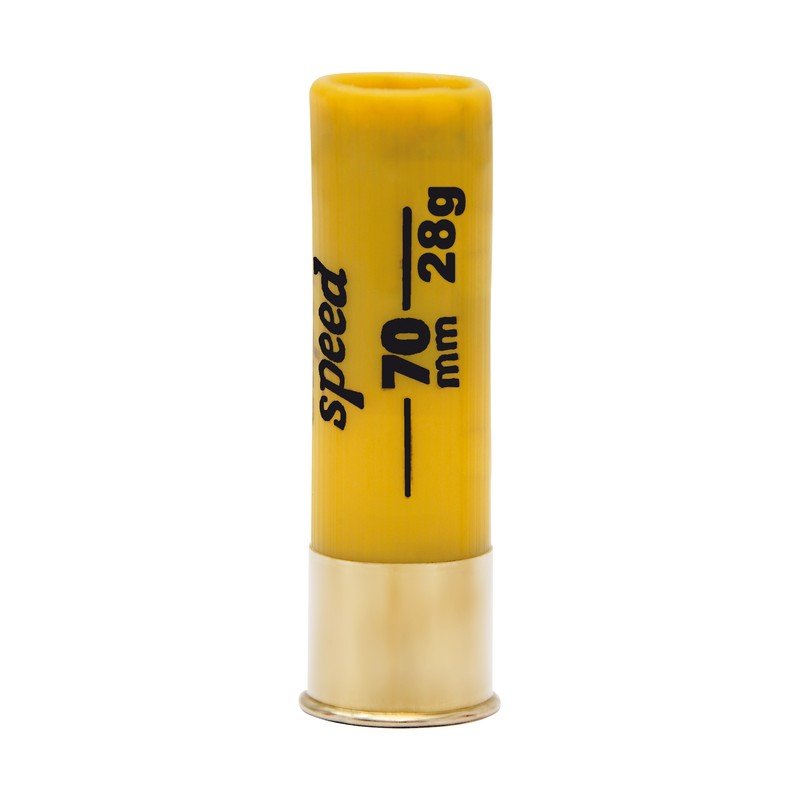
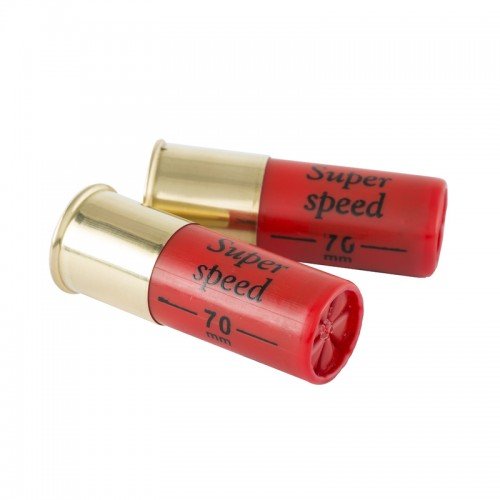
The 12/70 (designated 12x70mm in metric notation) is the most widely used shotshell in the world, known in the U.S. as 12 Gauge 2¾". Anyone using a shotgun for hunting, driven hunts, or sport shooting will encounter this shell sooner or later, because with shot, buckshot, and slug loadings it covers the broadest range of uses of any shotshell. Note that "12x70mm" is not a rifle cartridge; the "12" refers to the gauge, not a bullet diameter.
What "12 Gauge / 12/70" Means
The number "12" does not denote a metric bullet diameter but the shotgun gauge under the historic ball system: from one English pound of lead (453.6 g) you can cast exactly 12 equal round balls that fit the bore. The nominal bore diameter is 18.5 mm (.729"). The "70" stands for the case length in millimeters, measured after firing in the unfolded (fired) state, equal to 2¾".
| Feature | Value |
|---|---|
| Caliber system | Gauge (shotgun bore), not a metric bullet caliber |
| Nominal bore diameter | 18.5 mm / .729" |
| Case length (unfolded) | 70 mm / 2¾" |
| Max. gas pressure (C.I.P.) | 740 bar |
| Type | Shotshell (shot, slug, buckshot) |
| Main uses | Hunting, driven hunts, trap, skeet, sporting clays |
Synonyms and spellings (all the same shell): 12x70mm (metric), 12/70 (German short form), 12 Gauge 2¾" (SAAMI designation, USA), 12 ga. / 12 bore (English/British).
Ballistics & Performance
The effective range of the 12/70 depends decisively on the chosen projectile type, more so than for any rifle cartridge. There is not one answer to "how far?" but three fundamentally different answers depending on whether shot, buckshot, or a slug is fired.
Shot: range to about 35 meters. With shotshells it is not a single projectile that flies but a shot string of many small pellets. The limiting factor is pattern density, the area where enough pellets per square centimeter strike to be effective. For typical hunting loads this lies at about 30 to 35 meters; beyond that the pattern opens up, hit density falls, and effectiveness on game becomes unreliable. A classic ballistic table out to 100, 200, or 300 meters makes no sense for shot.
Buckshot: comparable, but larger individual pellets. Buckshot loads use noticeably larger pellets (for example 8.6 mm diameter) in small numbers. Effective range is similar to shot at about 25 to 40 meters, though the few large pellets spread more, which further limits the reliable effective distance.
Slug: effective hunting range to about 80 meters. Slugs are single projectiles and behave ballistically much more like a rifle cartridge. With modern slug designs, shots out to 50 to 80 meters are reasonable for hunting; with high-quality slugs, a scope, and a rifled-barrel shotgun, just under 100 meters under favorable conditions. However, slugs shed energy and accuracy quickly over distance due to their unfavorable ballistic coefficient (about 0.06 to 0.08), so genuine long-range use is not possible.
A note on maximum range (the danger zone): the maximum carry distance is well beyond effective hunting range. Shot can travel up to 200 to 300 meters, and slugs up to 800 to 1,000 meters; this danger zone must always be accounted for in practice.
| Projectile type | Effective hunting range | Limiting factor |
|---|---|---|
| Shot (e.g. No. 6, 2.7 mm, 32 g charge) | about 30 to 35 m | Pattern density |
| Buckshot (e.g. 8.6 mm) | about 25 to 40 m | Few pellets, spread |
| Slug | about 50 to 80 m (to ~100 m with rifled barrel) | Ballistic coefficient, accuracy |
Applications & Game
The answer again depends on projectile type. With shot, the 12/70 is used on game birds and small game; with slugs, it is the most-used configuration for driven hunts on wild boar.
Game taken with shot (within the effective range of about 30 to 35 meters): game birds such as ducks, geese, pheasants, pigeons, and crows are the core domain of the 12/70 with shot; small game such as hare, rabbit, and fox with an appropriate shot size; and predators such as fox and marten.
Game taken with slugs: for driven hunts on wild boar, the 12/70 with a slug is the most commonly used configuration. Sensible engagement distances are: wild boar to about 50 to 60 meters (typical driven-hunt distance); roe deer to about 50 meters; fallow deer and red deer to about 50 meters, where suitability is borderline and should be assessed for the specific situation. On larger game such as red deer, the 12/70 slug is usable in principle but only at short distances, and a slug typically cannot guarantee adequate energy at longer ranges.
A note on non-lead shot: non-lead alternatives in steel, bismuth, or zinc are available in 12/70 in a wide selection and cover all uses, from waterfowl to driven hunts. When using steel shot, check whether the shotgun and chokes are rated for steel shot, as older guns often are not.
Ammunition Types & Selection
The 12/70 combines three fundamentally different projectile concepts in a single gauge, which makes it unique. No other shotshell offers a comparable range of loadings for so many different situations.
Shot (game birds, small game, sport shooting): Shotshells are by far the most common loading form. Many small pellets in one shell create a pattern that reliably hits at short distance. Typical charges run between 24 and 36 grams; shot sizes range from 2.0 mm (No. 9, fine, for pigeons) to 4.0 mm (No. 3, coarse, for pheasants and foxes). For trap, skeet, and sporting clays, the shotshell is the only relevant choice; here pattern uniformity, low recoil, and consistent quality matter. Non-lead shotshells in steel shot or bismuth are available for nearly all uses, though with steel shot you should confirm the shotgun is rated for it, as older guns often are not.
Buckshot (driven hunts at short range): Buckshot loads contain few but very large pellets, typically 9 pellets of 8.6 mm diameter. They combine the advantages of multiple projectiles with greater individual effect and are used mainly on driven hunts at close range and, in some countries, for self-defense.
Slug (big game on driven hunts): Slugs are single projectiles weighing between 26 and 39 grams (about 400 to 600 grains). They turn the shotgun into a tool for big game at short to medium distances. Modern slugs are a long-standing classic. Non-lead alternatives (for example zinc slugs) are available for areas where lead is restricted.
| Projectile type | Typical charge | Main use | Non-lead available |
|---|---|---|---|
| Shot (steel/soft iron) | 24 to 36 g, shot sizes 2.0 to 4.0 mm | Game birds, small game, trap/skeet | Yes (steel, bismuth) |
| Buckshot | 9 pellets of about 8.6 mm | Driven hunts, close range | Partly |
| Slug | 26 to 39 g (about 400 to 600 gr) | Big game, wild boar | Yes (e.g. zinc slugs) |
Firearms & Platforms
The 12/70 is by far the most widely used shotgun gauge worldwide; practically every shotgun maker offers models for it. That means a huge selection for buyers, from inexpensive entry-level semiautos to handmade premium double guns.
Over/under (hunting and sport shooting): the classic choice for trap, skeet, and sporting clays as well as small-game hunting. Two stacked barrels allow two quick shots with different choke settings. Typical barrel lengths for trap and sporting are 71 to 81 cm (28 to 32"), and for hunting 65 to 71 cm (26 to 28").
Side-by-side (classic hunting tradition): with barrels side by side, it represents classic hunting tradition and is used today mainly for small-game hunting.
Semiautomatic (driven hunts and pigeon shooting): the first choice for driven hunts and pigeon shooting, offering fast follow-up shots, good recoil reduction, and high magazine capacity. For driven hunts on wild boar, a short barrel (51 to 61 cm / 20 to 24") is recommended, possibly with an interchangeable rifled barrel for slugs and a red dot sight for fast target acquisition.
Pump-action (versatile and reliable): rugged, low-maintenance, and reliable even with light loads. Barrel lengths for driven hunts and general use are likewise around 51 to 61 cm.
Combination guns (when both shot and a rifled bore are wanted): drillings and combination rifle/shotgun guns pair one or two smoothbore barrels with a rifled barrel, allowing both ammunition types in a single gun.
Chamber compatibility (important): shotguns with a 12x76 chamber (Magnum, 3") can also fire 12/70 shells without issue, as the longer chamber accommodates the shorter case. The reverse does not work: a 12/70 chamber cannot accept 12x76 Magnum shells. When buying a shotgun it is worth checking the chamber length, as a 12x76 chamber offers more flexibility.
Practical Notes
Slug accuracy (smooth bore vs. rifled bore): a decisive practical factor is whether the shotgun has a smooth or rifled barrel. Modern slugs work in smooth bores but achieve significantly better accuracy at 50 and 100 meters in rifled barrels, which are available as interchangeable barrels for many semiautomatic shotguns. For serious slug use on driven hunts, rifled interchangeable barrels are often recommended.
Recoil by loading: felt recoil varies strongly with charge weight. A light trap load with a 24 g charge is far more comfortable to shoot than a heavy hunting load of 36 g or a 39 g slug, the latter being at the upper end of what a 12/70 shell can sensibly hold. The difference is especially noticeable in light shotguns.
Steel shot in older shotguns: steel shot is harder than lead and can damage barrels and chokes not designed for it. Before switching to non-lead steel-shot loads, confirm that the shotgun and chokes are rated for steel shot; relevant information is in the gun documentation or from the manufacturer.
Summary
The 12/70 is the most versatile shotshell there is, and that is no exaggeration. No other shotshell covers a comparable spectrum: from a 24 g trap load at the range to a 39 g slug on a driven hunt, from classic duck hunting to sporting-clays competition.
Strengths at a glance: three projectile concepts in one gun (shot, buckshot, slug from the same gauge); the largest ammunition selection of any shotshell, from the cheapest trap load to high-performance slugs; the standard gauge for trap, skeet, and sporting clays worldwide; the most-used configuration for driven hunts on wild boar (with a slug); and non-lead alternatives available in all three projectile types.
Limits, stated honestly: effective range, even with the best slug, stays limited to about 50 to 80 meters; for longer distances the 12/70 is no substitute for a rifle cartridge. Recoil with heavy loads (36 g and up) is noticeable, especially in light shotguns. And on large game such as red deer, 12/70 slugs are possible but borderline.
For hunters seeking a universal shotshell for small-game and driven hunting, and for sport shooters in trap, skeet, or sporting clays, the 12/70 is the standard choice with the broadest selection of loadings and firearms. Those who intend to hunt big game exclusively at distances beyond 80 meters should consider a rifle cartridge.
Key figures at a glance: nominal bore diameter 18.5 mm; case length 70 mm; effective shot range about 30 to 35 m; effective slug range about 50 to 80 m; typical slug weights 28 to 39 g (430 to 600 grains).