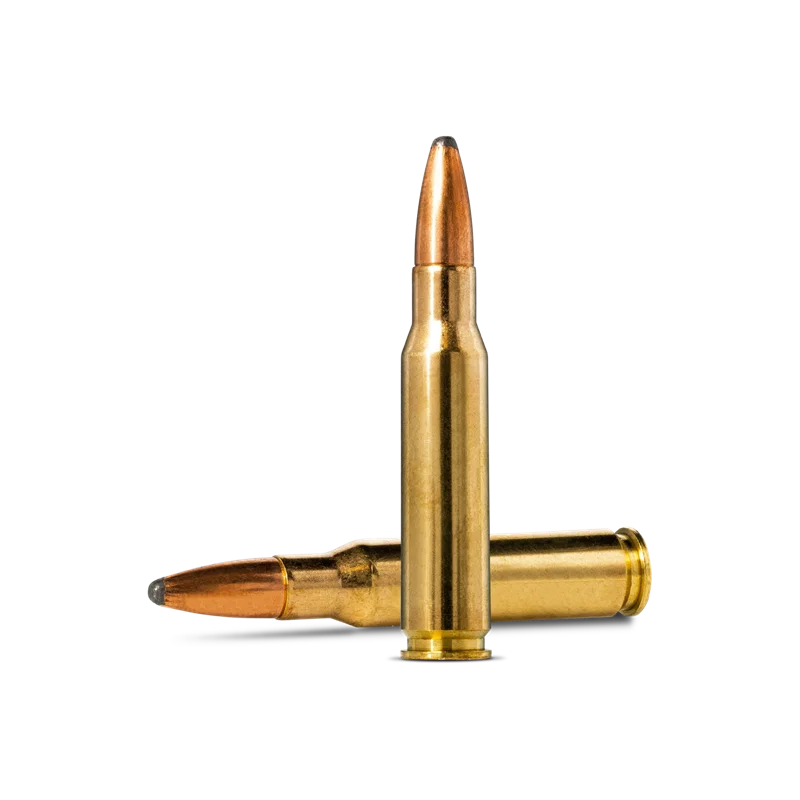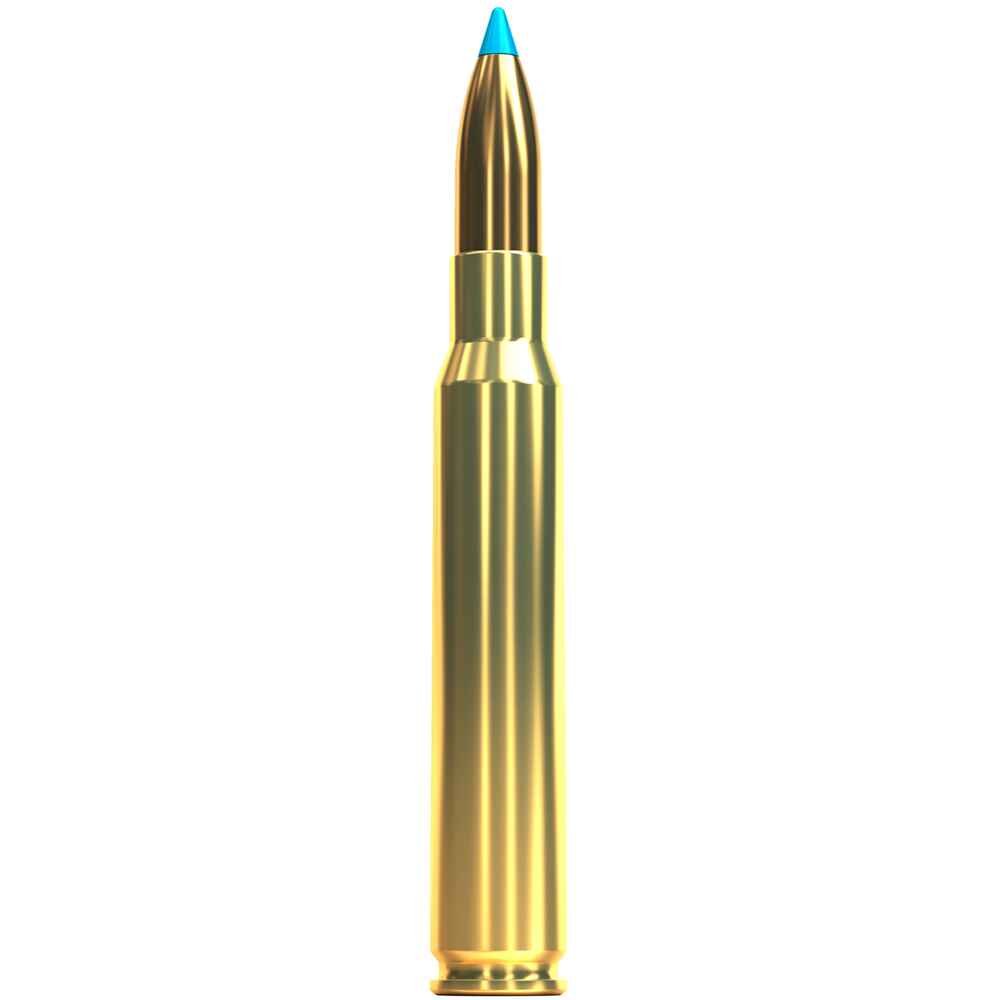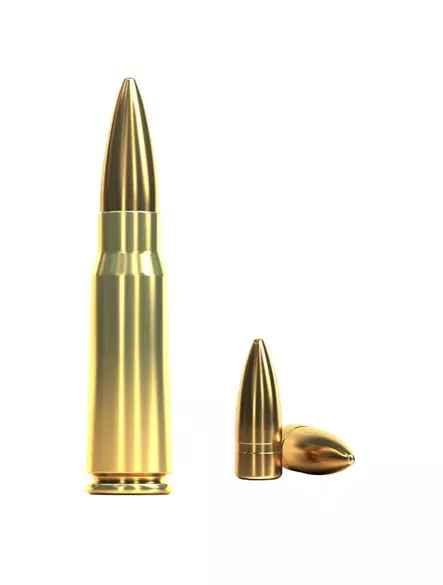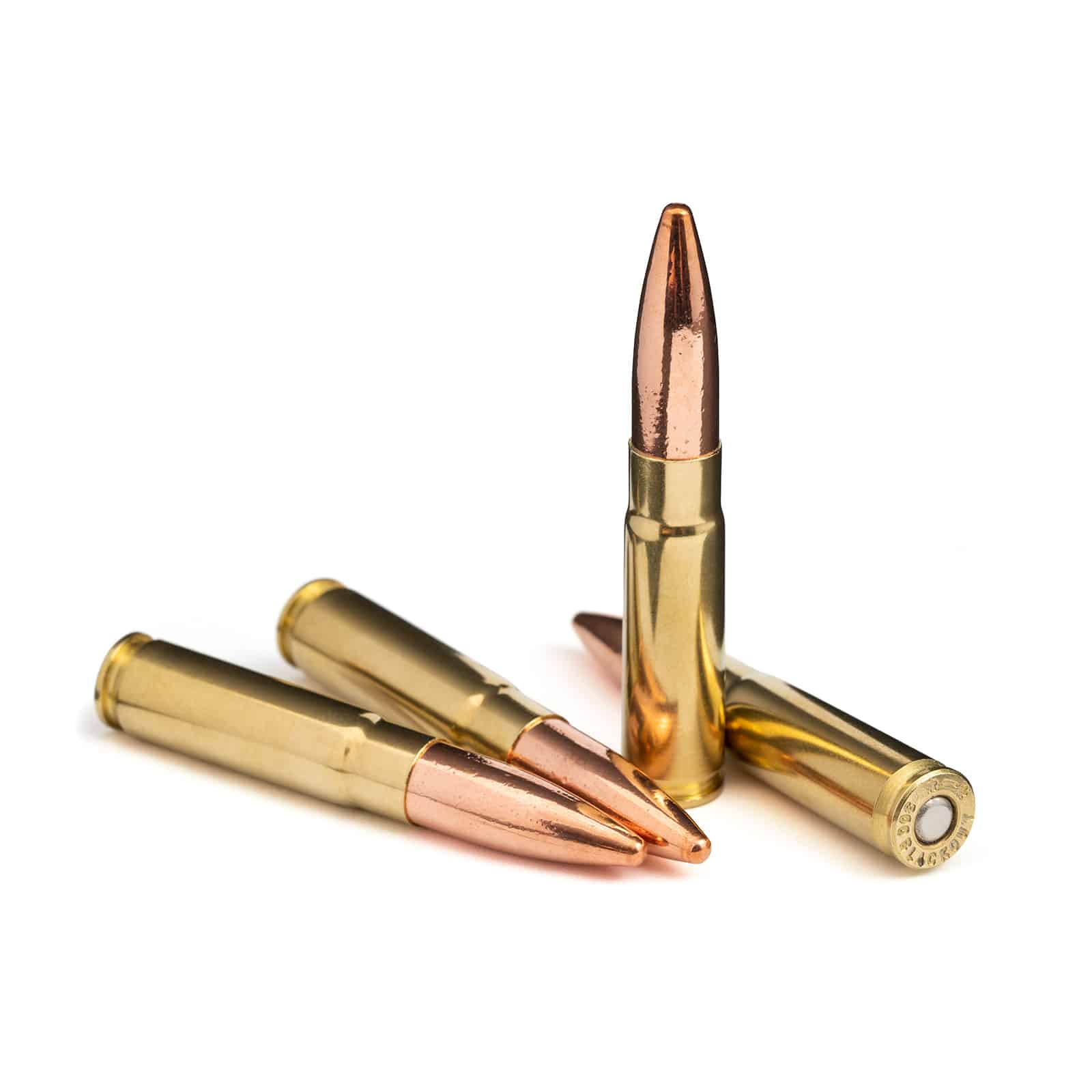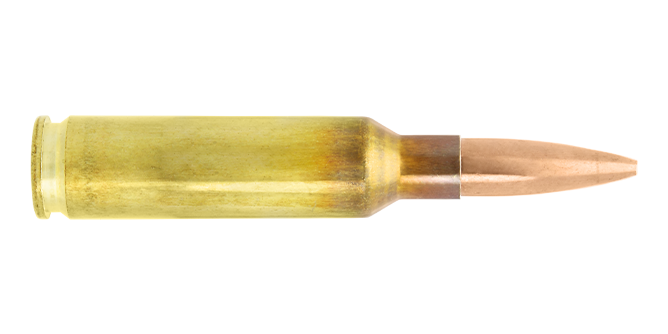
Best price.223 Rem / 5.56 PMC · 55gr · FMJ · Brass
$9.50Lowest total price
~2-5 business days


Prices last updated Mon, Jun 15
Prices and availability are provided by the retailers and may change. We do our best to keep them current, but always confirm the final price at the store before purchasing.







The .223 Remington is a versatile small-bore centerfire cartridge built for sport shooting, varmint and predator hunting, and—depending on the load and application—lighter game. Its hallmarks are low recoil, high accuracy, affordable ammunition, and broad use across both bolt-action rifles and semi-automatic platforms. The cartridge excels at precise shots from short to medium range and is enormously popular with both target shooters and hunters. It is an especially good fit for anyone looking for a controllable, accurate, and economical caliber with excellent market availability.
The .223 Rem. is one of the most widely used small-bore centerfire cartridges in the world—and for good reason. It offers a compelling package of high accuracy, moderate recoil, and broad ammunition and firearm availability.
The .223 Remington was developed from the .222 Remington to meet military requirements. SAAMI then standardized the cartridge for the civilian market before NATO adopted it as the 5.56×45mm.
At first glance the two cartridges look identical. The case geometry is nearly the same, but chamber pressure and the so-called leade length (the freebore ahead of the rifling) differ significantly. The .223 Rem. operates to the C.I.P. standard at a maximum of 430 MPa, while the SAAMI standard specifies 379 MPa (55,000 psi). The 5.56×45mm NATO loading generates higher pressures than the civilian .223 Rem. cartridge.
Important safety note: .223 Rem. cartridges can be fired safely from barrels chambered in 5.56 NATO. The reverse—NATO ammunition in a dedicated .223 Rem. chamber—calls for caution, because the higher chamber pressure of the NATO loading can overstress the firearm. When in doubt, confirm with a gunsmith which chamber your firearm has.
| Specification | Value |
|---|---|
| Type | Centerfire |
| Bullet diameter | 5.7 mm (.224″) |
| Case length | 44 mm |
| Overall length | 57 mm (2.26″) |
| C.I.P. p-max | 430 MPa |
| SAAMI MAP | 379 MPa (55,000 psi) |
| Common bullet weights | 55 gr (3.6 g) – 77 gr (5 g) |
| V0 / E0 (77 gr BTHP, 24″ barrel) | 840 m/s (2,756 ft/s) / 1,753 J (1,293 ft-lbs) |
| V0 / E0 (55 gr FMJ) | No reliable data available |
| Reference barrel length | 610 mm (24″) |
| Common twist rates | 1:12″ (light) to 1:7″ (heavy) |
The .223 Rem. covers a broad spectrum with bullet weights from 55 to 77 grains—from fast 55 gr loadings for sport and predator hunting to precise 77 gr BTHP match loads delivering 840 m/s (2,756 ft/s) muzzle velocity and 1,753 J (1,293 ft-lbs) muzzle energy from 24″ barrels. Also worth noting is the .223 Ackley Improved, a performance-enhanced wildcat variant with improved powder efficiency, though it remains a niche in practice.
The .223 Rem. delivers 840 m/s (2,756 ft/s) and 1,753 J (1,293 ft-lbs) at the muzzle with Federal's 77 gr BTHP loading from a 24″ barrel.
| Loading | V0 (m/s) | E0 (J) |
|---|---|---|
| 77 gr BTHP (Federal, 24″) | 840 (2,756 ft/s) | 1,753 (1,293 ft-lbs) |
Complete ballistic tables with velocity, energy, and bullet drop from 50 to 300 m could not be independently verified. The best approach is to consult the manufacturer data sheets from Federal or Hornady, or to use a ballistic calculator with the specific BC value of the chosen loading.
In the sporting world, 77 gr BTHP match loads are routinely used at distances beyond 300 m. Anyone wanting to run heavy 77 gr bullets at long range needs a twist rate of 1:7″ to 1:8″ so the bullet is adequately stabilized.
It is also worth knowing that barrels chambered in 5.56 NATO can produce slightly higher muzzle velocities than dedicated .223 Rem. chambers—though the exact difference depends on the specific loading and cannot be stated as a blanket figure.
The .223 Rem. offers a wide selection, from inexpensive training rounds to precise match loads and hunting-grade expanding bullets. The right choice depends on the intended use.
By far the most common bullet weight is 55 gr (3.6 g). This loading is equally suited to training, target shooting, and predator hunting. Heavier are the 62 gr bullets in the style of the military SS-109 / M855 type with a steel core. At the top end are 77 gr bullets (5 g), used for match and precision shooting.
| Bullet type | Typical weights | Use | Lead-free? |
|---|---|---|---|
| FMJ (full metal jacket) | 55 gr | Training, sport | No |
| FMJ with steel core (SS-109 / M855) | 62 gr | Military / sport | No |
| BTHP (match) | 77 gr | Match, precision | No |
| Expanding bullet (soft point) | 55–62 gr | Hunting (small/medium game) | Some |
| Hollow point (HP) | 55–62 gr | Hunting (small/medium game) | Some |
| Lead-free | Variable | Hunting | Yes |
Manufacturers such as Hornady, Norma, RWS, and Barnes also offer .223 Rem. loadings, including a growing range of lead-free expanding bullets. Subsonic loadings play no relevant role in this caliber: the .223 Rem. is built for high muzzle velocity, and subsonic ammunition is scarce on the market and not practically useful here.
The .223 Rem. is well established for varmint and predator hunting (fox, marten, raccoon), where it is fielded widely and effectively. With suitable expanding loads it is also a capable roe-deer-class cartridge at shorter ranges. With a bullet diameter of just 5.7 mm and modest energy compared with larger calibers, it is not suited to large hoofed game such as red deer, fallow deer, mouflon, or chamois, or to heavy wild boar; those animals call for larger-bore cartridges.
In the field, the .223 Rem. is best understood as a roe-deer-and-predator caliber. With expanding bullets (soft points and hollow points) on roe deer, meat damage is low to moderate with a correct chest shot. On a bone hit, the relatively high velocity of the .223 Rem. bullet can cause more pronounced destruction, so precise shot placement is especially important.
The .223 Remington is equally at home in both major firearm categories: bolt-action rifles and semi-automatics. This versatility is a big part of the cartridge's appeal—for both hunting and sport shooting.
The AR-15 platform is the most widely used semi-automatic system in this caliber worldwide and is available in countless configurations. Alongside the AR-15, the market offers a broad selection of bolt-action rifles for .223 Rem., including models from CZ (e.g., CZ 527), Tikka (e.g., T3x), Ruger (e.g., American Rifle), Savage, and Howa.
Compact bolt guns and semi-autos with barrel lengths around 42 to 51 cm (16.5 to 20″) are popular for driven hunts, while match and benchrest shooters often favor barrels of 56 to 61 cm (22 to 24″).
Barrel twist rate determines which bullet weights are optimally stabilized. A poorly chosen twist rate can significantly degrade accuracy.
| Bullet weight | Recommended twist | Note |
|---|---|---|
| 40–55 gr | 1:12″ to 1:9″ | Light bullets, classic hunting and training |
| 62–69 gr | 1:9″ to 1:8″ | Medium-weight hunting and general-purpose bullets |
| 70–77 gr | 1:8″ to 1:7″ | Heavy match bullets, optimal for BTHP |
Shorter barrels reduce muzzle velocity relative to the 24″ reference barrel—roughly 50 to 100 m/s depending on the loading. Hunters using the .223 Rem. should verify whether their chosen loading still delivers adequate energy at the intended distance from the actual barrel installed.
The .223 Rem. is regarded among shooters and hunters as an exceptionally accurate caliber.
In the match world, high-quality 77 gr BTHP loads from precision rifles routinely produce groups under 1 MOA—about 2.9 cm at 100 m. With standard 55 gr FMJ ammunition, groups of 1.5 to 2.5 MOA are realistic from good bolt guns. These figures make the .223 Rem. one of the most accurate calibers in its price class.
Recoil is very moderate even from light rifles. That is a clear advantage for new shooters, the recoil-sensitive, and anyone needing fast follow-up shots on driven hunts. The low recoil also allows better observation of bullet impact without losing the sight picture.
The .223 Rem. is one of the most versatile small-bore cartridges in the hunting and sporting world, with clearly defined strengths. It offers a broad bullet spectrum from 55 to 77 grains covering uses from predator hunting with light 55 gr loads, to roe-deer-class hunting with expanding bullets, to precision shooting with 77 gr BTHP match loads (840 m/s / 2,756 ft/s and 1,753 J / 1,293 ft-lbs from 24″ barrels). Add moderate recoil, high accuracy, and a very broad firearm and ammunition selection, with both bolt guns and semi-automatics like the AR-15 widely available.
For shooters who want a precise, low-recoil caliber for predator and roe-deer-class hunting at distances up to about 150 m while staying flexible on the range or in match shooting, the .223 Rem. is one of the best options in the small-bore centerfire segment. One practical caution: the potential for confusion with the 5.56×45mm NATO cartridge always warrants attention when buying both firearm and ammunition.
We use cookies to keep the site working and to understand how it's used. Learn more in our Cookie Policy.
76 offers