$24.99$1.25 / roundLowest total price
Credova
~3-5 business days + transit

Prices last updated Mon, Jun 15
Prices and availability are provided by the retailers and may change. We do our best to keep them current, but always confirm the final price at the store before purchasing.





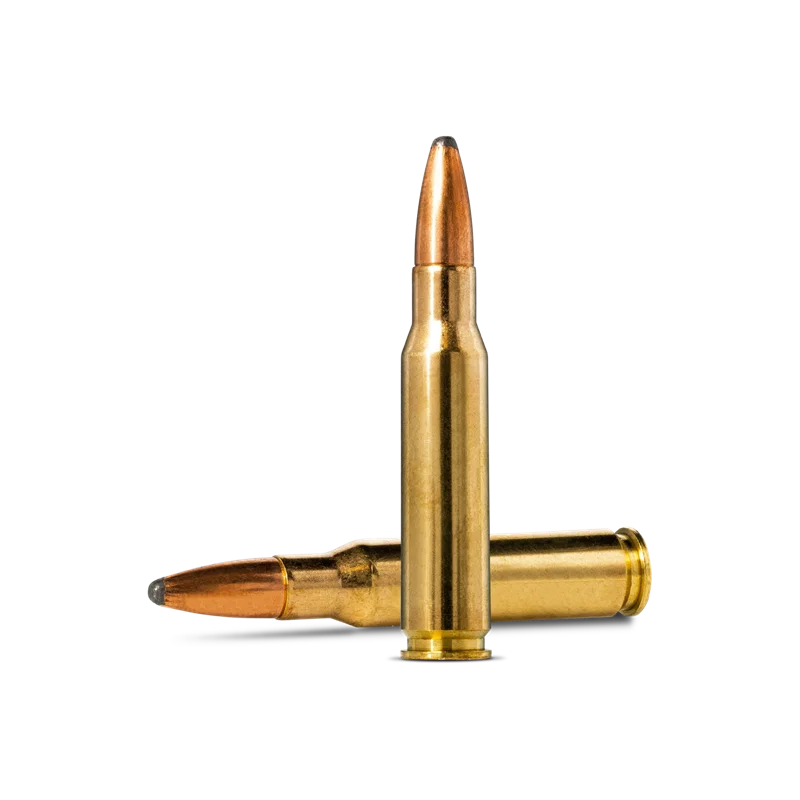
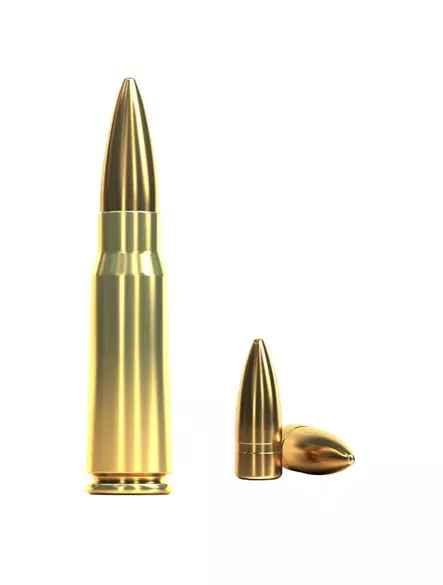
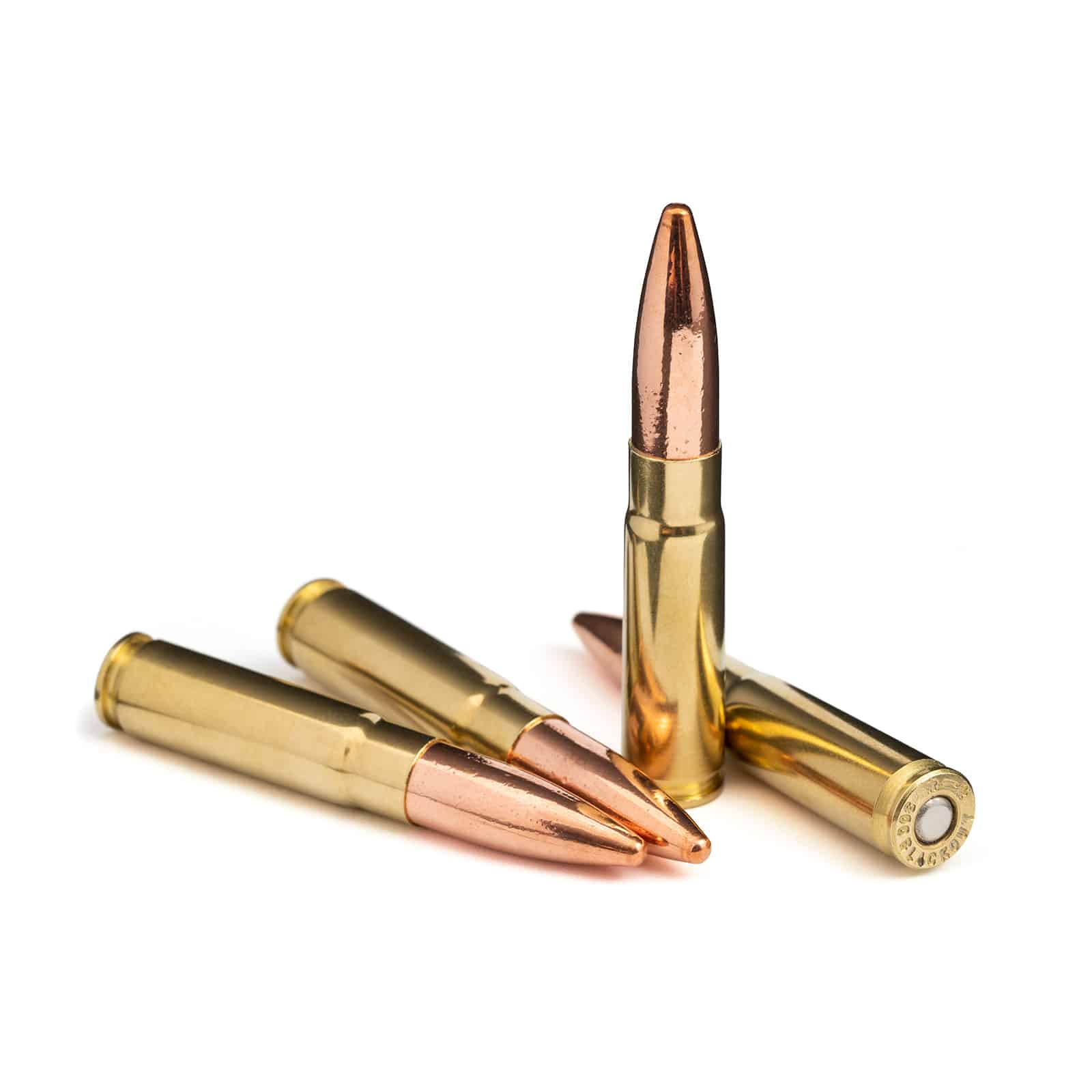
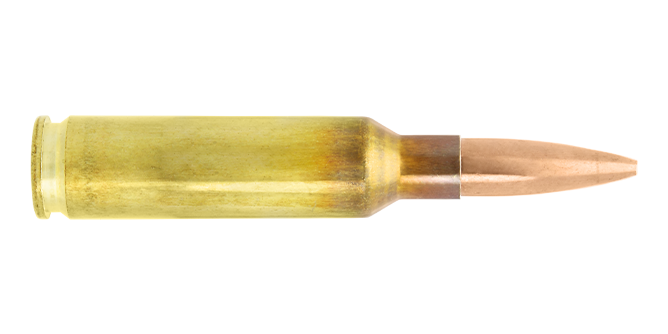
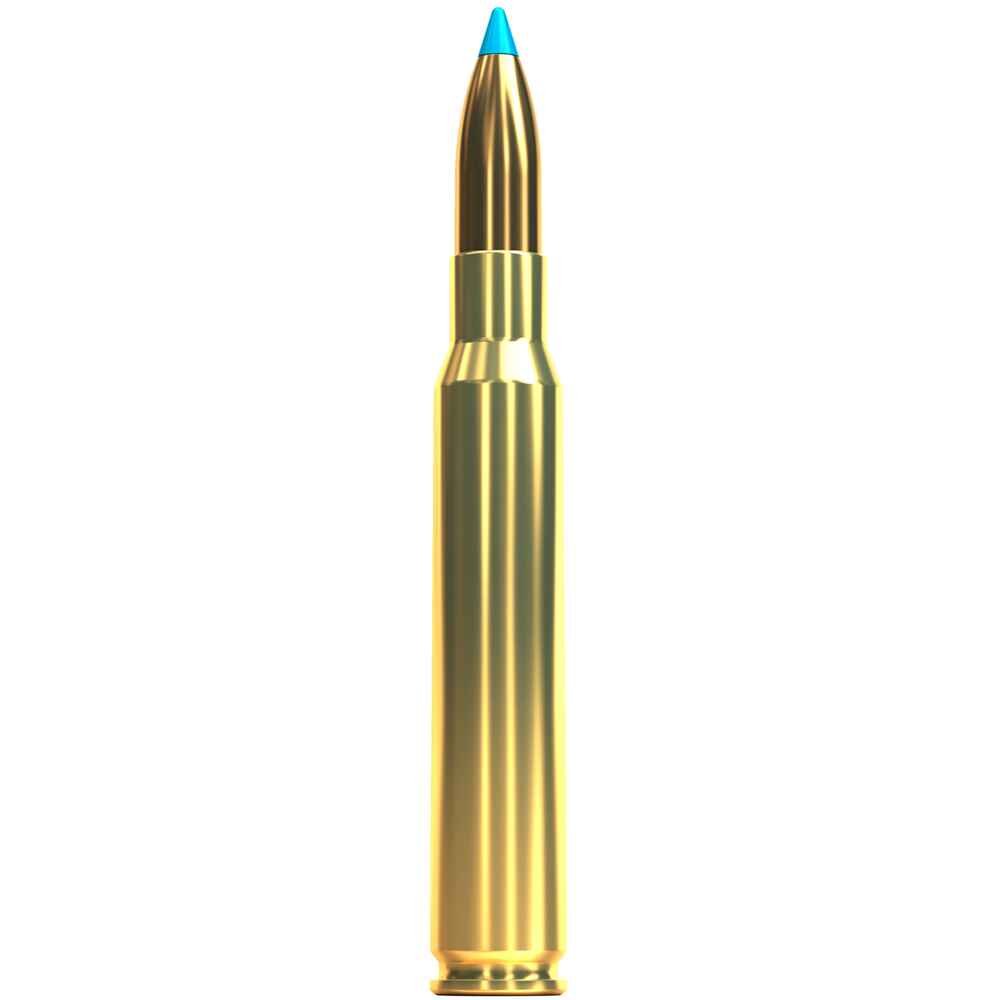
The .30-06 Springfield (metric: 7.62x63 mm) is a tradition-rich big-game cartridge with an exceptionally broad range of use, and it has been one of the most popular rounds for hunting and sport shooting for decades. Its defining traits are outstanding versatility, high energy, a huge selection of factory loads, and suitability for nearly all big-game species. The cartridge performs equally well from a stand, on the stalk, and in all-around hunting use as it does in sport shooting at medium distances. The .30-06 appeals to hunters and shooters who want a proven, powerful, universally capable cartridge with strong market availability and a long history.
The .30-06 Springfield has been one of the most widely used hunting cartridges in the world for over a century, and for good reason. Originally introduced in 1906 as a U.S. military cartridge, it found its way from the battlefield to hunting grounds around the globe. With a bullet-weight range from 150 to 220 grains, the .30-06 covers everything from roe deer to heavy big game. Despite its military origins, the .30-06 Springfield does not carry a NATO designation.
It is a centerfire cartridge, meaning ignition occurs via a primer in the base of the case, which makes it reliable and widely available.
| Property | Value |
|---|---|
| Designation | .30-06 Springfield / 7.62x63 mm |
| Synonyms | .30 Government '06, .30-06 Spr., 7.62x63 |
| Type | Centerfire |
| Bullet diameter | 7.85 mm (.308 in) |
| Case length | 63.35 mm |
| Max. overall length (OAL) | 84.84 mm |
| C.I.P. pmax | 405 MPa |
| SAAMI MAP | 58,800 psi (≈ 405 MPa) |
| Bullet weights (typical) | 150–220 gr (9.7–14.3 g) |
| Twist rate | Commonly 1:10" (to be verified) |
Both standards set the maximum gas pressure at about 405 MPa. The measurement methods differ, however: C.I.P. (the European standard) uses piezo measurement technology, while SAAMI (the American standard) traditionally uses the older crusher method. For shooters using factory-loaded ammunition, this has no practical effect. For handloaders, the difference matters when calculating loads and should be kept in mind when converting load data.
The .30-06 Springfield is typically used at distances up to roughly 200–250 m. Under optimal conditions and with suitable loads, effective shots at 300 m and beyond are also possible, though this depends heavily on the chosen load, barrel length, and sighting system.
For most hunting situations, distances beyond 300 m are rarely relevant in practice. The .30-06 reliably handles typical hunting distances. For shooters who regularly engage targets at 500 m and beyond, more modern cartridges with higher ballistic coefficients (BC) are often the better choice. For the vast majority of hunters, however, the .30-06's ballistics are more than adequate for everyday demands.
Note: Ballistic figures refer to manufacturer data for a standard barrel length. In shorter hunting barrels (e.g., a 51 cm / ~20" driven-hunt barrel), muzzle velocity and energy values are lower. As a rough rule of thumb cited in the literature, expect a velocity loss of about 15 to 25 m/s per inch of barrel reduction compared with a standard barrel; this is only an orientation value without test data.
The right load depends primarily on the intended use. A roe-deer hunter needs a different bullet than someone after heavy wild boar, or someone training regularly at the range.
FMJ (Full Metal Jacket): The bullet is fully jacketed and barely deforms on impact. For sport shooting and range training it is the most economical choice. It produces no controlled deformation, so it is intended for target and practice use rather than big-game hunting.
Soft Point: The classic hunting bullet. The exposed tip ensures controlled mushrooming on impact while the jacket holds the bullet together. The selection in .30-06 is enormous.
Hollow Point: The hollow tip triggers very rapid expansion. Less common in .30-06 than soft-point variants, but available for smaller game or specialized loads.
Match (BTHP/OTM): These bullets are designed for maximum precision rather than terminal performance on game. First choice for sport shooting. Whether a given match bullet is suitable for hunting depends on its specific construction; the name does not decide this — the behavior on impact does.
| Category | Weight range | Typical use |
|---|---|---|
| Light | 150–155 gr | Roe deer, flat trajectory, high muzzle velocity |
| Medium | 165–168 gr | All-around (roe deer to medium big game) |
| Heavy | 180–200 gr | Heavy big game (red deer and wild boar) |
| Very heavy | 200–220 gr | Specialty use, heavy game, subsonic loads |
Lead-free bullets in .30-06 rely mostly on copper deformation designs. Because copper is lighter than lead, these bullets tend to be lighter at a given caliber, which generally results in higher muzzle velocities. The ballistic coefficient may be somewhat lower than that of heavy lead-core bullets, depending on the design. Lead-free loads are offered by several manufacturers, usually as copper hollow-point constructions.
Subsonic loads are of interest for use with a suppressor. Factory-produced subsonic ammunition in .30-06 is rare. The very heavy 200- to 220-grain bullets can reach subsonic velocities when combined with reduced powder charges. Because finished factory subsonic loads in .30-06 are hard to find, this remains primarily a field for experienced handloaders.
The .30-06 Springfield can be used on virtually the entire range of big game, and most common loads handle these tasks comfortably.
With a bullet diameter of 7.85 mm (.308 in), the .30-06 is a substantial .30-caliber cartridge well suited to all of the above hoofed game.
| Game | Recommended bullet type | Recommended weight |
|---|---|---|
| Roe deer | Soft point / lead-free deformation bullet | 150–165 gr |
| Wild boar | Bonded / partition | 165–180 gr |
| Red deer | Heavy deformation bullet | 180–200 gr |
For very heavy game such as bison or moose, the .30-06 is rated differently across the international literature. Hunters pursuing such game should seek advice based on concrete ballistic data and local regulations.
The .30-06 Springfield is a caliber for which nearly every major firearms manufacturer offers at least one model. This breadth makes finding a suitable rifle easy.
Barrel-length choice affects both handling and ballistics. Short barrels of about 51 cm (~20") are typical for driven-hunt configurations: the rifle is handier and lighter to carry but gives up some velocity. Standard hunting barrels of about 56 cm (22") are the most common configuration and the best compromise between handling and ballistics. Long barrels from 61 cm (24") maximize use of the powder charge and are of more interest for long-range sport shooting.
For most hunters the bolt-action is the first choice in .30-06. Bolt rifles generally offer higher precision, lower weight, and a much larger model selection, and many are simpler to maintain and handle.
Semi-automatics have a clear advantage for driven hunts, where fast follow-up shots on moving game are decisive, and their heavier weight is less of an issue. The model selection in .30-06 is, however, considerably narrower for semi-automatics than for bolt-actions. Switch-barrel systems offer a flexible way to cover both roles.
The .30-06 generates noticeable but well-manageable recoil in typical hunting rifles with a 3.0 to 3.5 kg action weight. Experienced shooters find it moderate; for beginners, a recoil pad on the stock or a heavier rifle can help.
The effect on the carcass depends heavily on bullet type. Fast-expanding hollow-point bullets create large wound channels, which increases effect but may damage more meat. More robust constructions such as bonded or partition bullets penetrate deeper, expand in a more controlled manner, and better preserve meat on heavy big game.
Among hunters, the .30-06 is regarded as uncritical across varying temperature conditions, whether on a cold-weather driven hunt or in summer fields.
The .30-06 Springfield regularly meets three direct competitors in the field and on the shelf: the .308 Winchester, the 8x57 IS, and the .300 Win Mag. Each has its place; the question is which suits your hunting practice.
.30-06 vs. .308 Winchester: The .308 Winchester is the closest relative of the .30-06. Both fire bullets of identical diameter (7.85 mm), but the .30-06 has a noticeably longer case. With light bullets the two deliver similar performance; with heavy bullets from 180 gr up, the .30-06 can leverage its greater powder capacity and tends to achieve higher energy. Those who primarily hunt roe deer and medium big game and value lower ammunition cost often find the .308 sufficient. Those wanting more reserve for heavy game or somewhat greater distances are better served by the .30-06.
.30-06 vs. 8x57 IS: The 8x57 IS offers a similar performance level at typical hunting distances but uses a different bullet diameter (8.2 mm). For hunters who rarely travel abroad it is a fully capable alternative; the .30-06 has the edge in international ammunition availability.
.30-06 vs. .300 Win Mag: The .300 Win Mag plays in a different league: more powder, more energy, more recoil, and higher ammunition cost. For the majority of shots taken under 200 m, the .300 Win Mag's reserves are seldom necessary. For regular long-range shooting or very heavy game, it offers more reserve; for most general hunting use, the .30-06 is the more balanced package.
The .30-06 Springfield is no longer a trendsetter — it is a proven standard. In use for over 100 years, it still offers one of the most versatile application ranges of any common hunting cartridge. Its 150–220 grain weight spectrum covers everything from a light 150-gr load for roe deer to a heavy 180-gr construction for red deer and wild boar. Worldwide ammunition and firearm availability is hard to beat.
It offers no decisive performance advantage over the .308 Winchester with light bullets, and its recoil is more noticeable than that of shorter .30-caliber cartridges; against magnums like the .300 Win Mag, its long-range reserves run out sooner. It more than offsets these points through sheer versatility, an enormous selection of loads, and excellent firearm and ammunition availability. For hunters seeking a versatile caliber for roe deer through red deer at distances up to about 250 m, the .30-06 Springfield is an outstanding overall package.
We use cookies to keep the site working and to understand how it's used. Learn more in our Cookie Policy.
76 offers