$19.95$1.00 / roundLowest total price
Sezzle
Ships in 1-3 days · ~1-5 business days

Prices last updated Mon, Jun 15
Prices and availability are provided by the retailers and may change. We do our best to keep them current, but always confirm the final price at the store before purchasing.




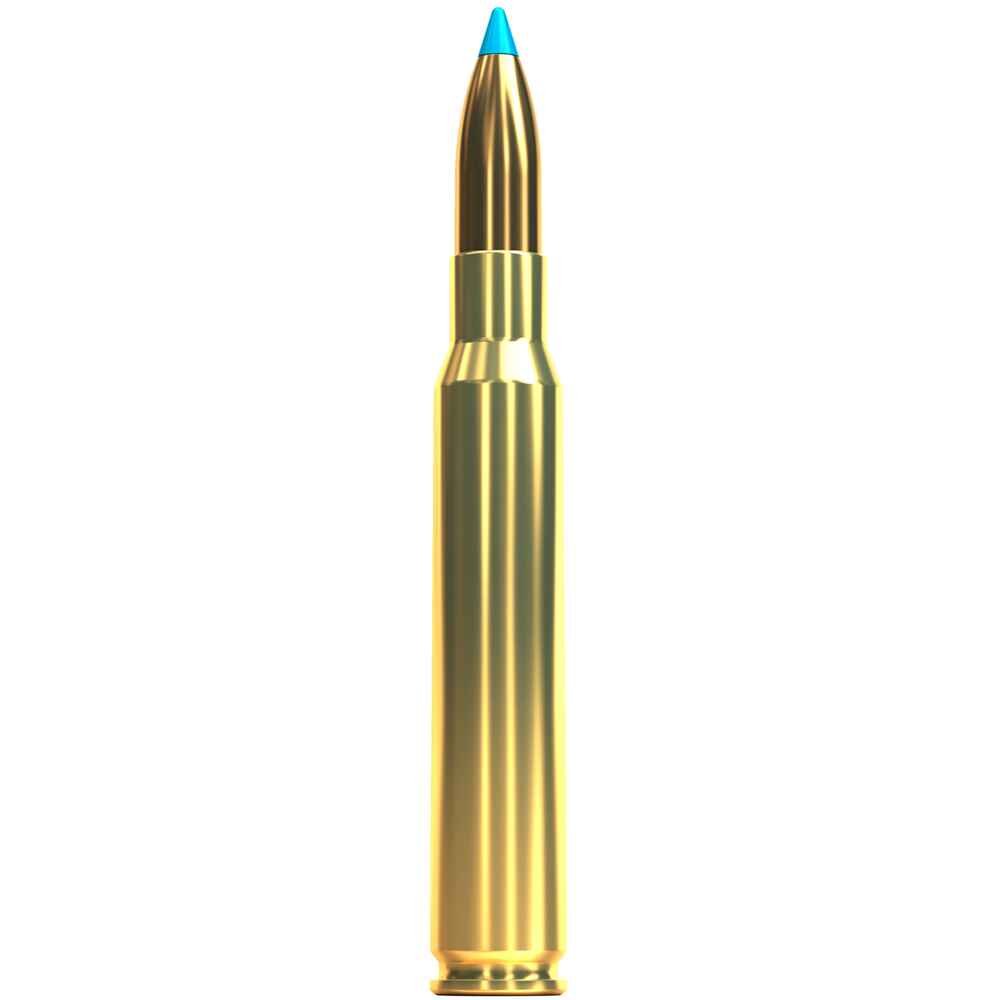
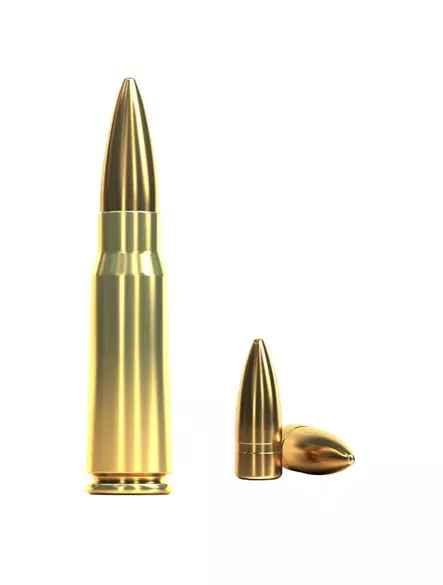
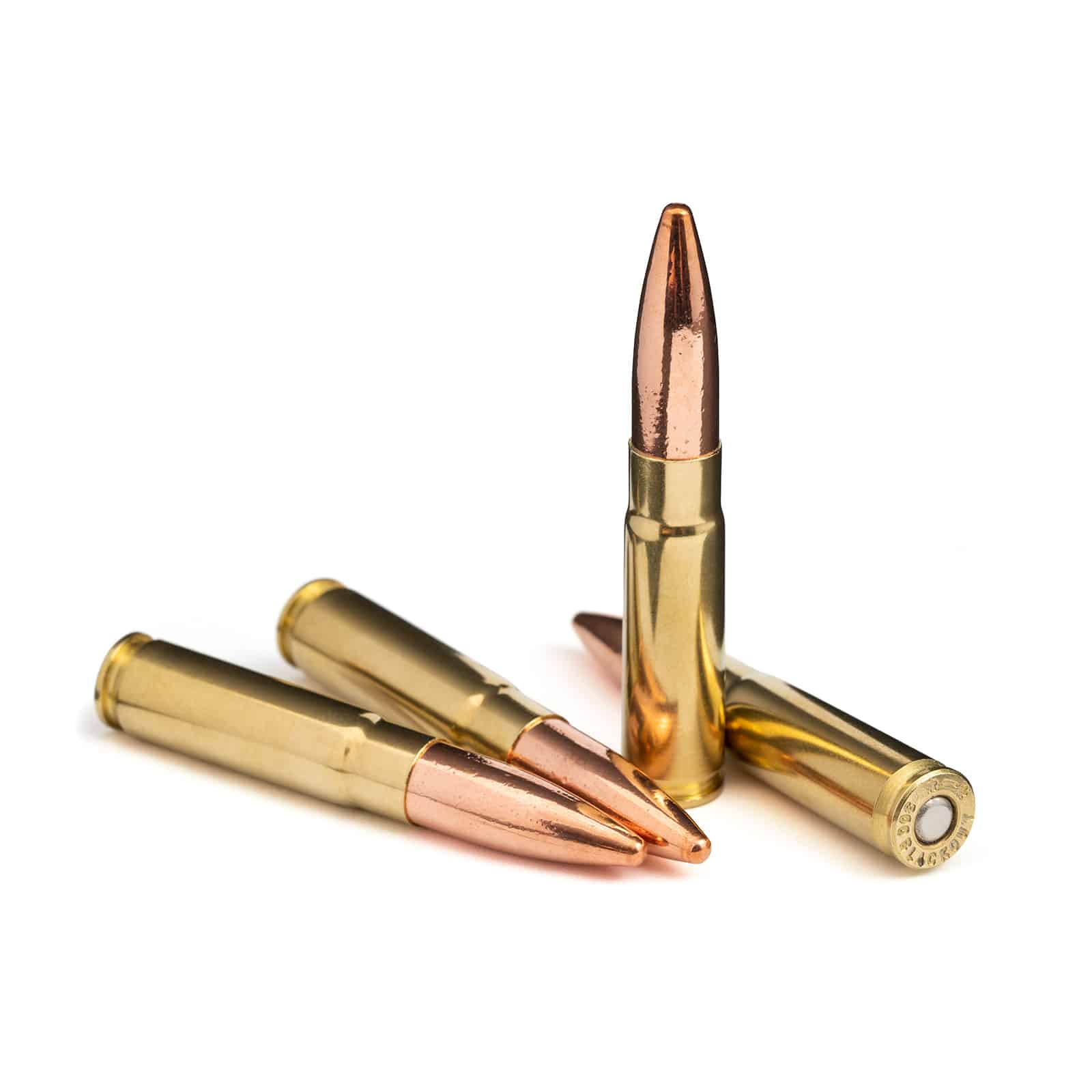
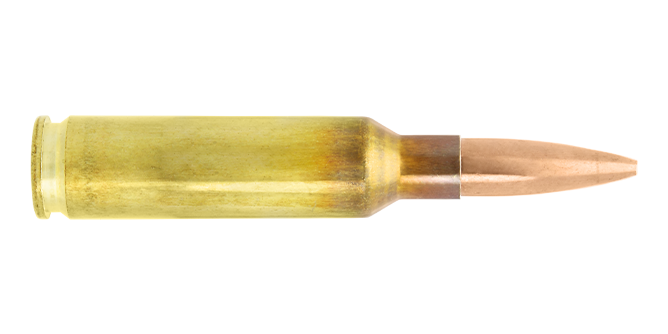
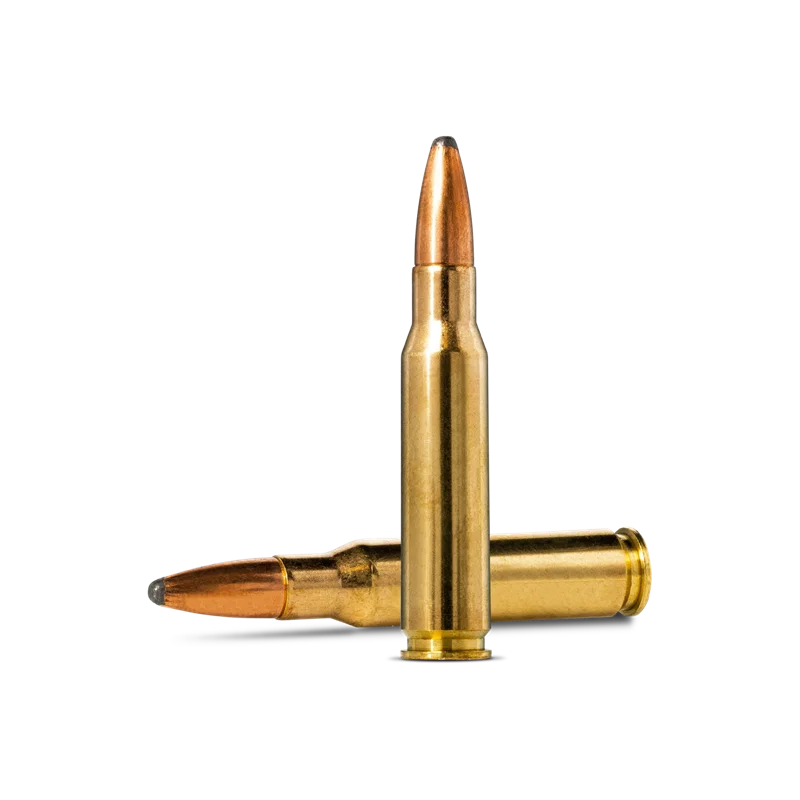
The .308 Winchester is one of the most versatile hunting and sporting cartridges in existence and has established itself worldwide as a standard for big-game hunting, precision shooting, and everyday field use. Its defining characteristics are balanced ballistics, good energy transfer, manageable recoil, and an enormous selection of hunting, match, and lead-free loads. The cartridge is especially well suited to roe deer, fallow deer, red deer, and wild boar, as well as to precision sport shooting at short to medium range. It appeals to hunters and shooters looking for a universal, accurate, and widely available cartridge with high real-world relevance.
The .308 Winchester is a centerfire cartridge with a long and successful track record. It was developed by Winchester in 1952, in parallel with the military T65 program that later became the 7.62×51 NATO. It is also known as the .308 Win., 7.62×51 mm, or 7.62×51 NATO. The NATO variant runs at slightly lower pressures than the civilian .308 Winchester, which matters for firearm owners: NATO ammunition can be fired in .308 Winchester firearms, but .308 Winchester ammunition should not be used in NATO-chambered firearms.
The cartridge has become the most versatile all-rounder for hunters and sport shooters. With a bullet diameter of 7.82 mm (.308 in) and a case length of 51.18 mm, it offers a proven baseline design. The C.I.P. standard (Commission Internationale Permanente) defines a maximum pressure of 415 MPa, while the American SAAMI standard is slightly higher at 427.5 MPa (62,000 psi). Typical overall cartridge length is 71.12 mm.
| Specification | Value |
|---|---|
| Designations | .308 Winchester, 7.62×51 mm, .308 Win. |
| Type | Centerfire |
| Bullet diameter | 7.82 mm (.308 in) |
| Case length | 51.18 mm |
| Overall length | 71.12 mm |
| C.I.P. max pressure | 415 MPa (4,150 bar) |
| SAAMI max pressure | 427.5 MPa (62,000 psi) |
| Common twist rates | 241–356 mm (1:9.5 to 1:14 in) |
| Reference barrel length | 600 mm (24 in) |
With .308 Winchester ammunition, bullet weights vary considerably by intended use. Hunting loads typically run from 147 to 180 grains (9.5 to 11.7 g), while match loads for sport shooters fall between 155 and 175 grains (10.0 to 11.3 g).
Performance figures vary by load. Muzzle velocity (V0) is usually between 783 and 855 m/s, and muzzle energy (E0) therefore ranges from 3,519 to 3,912 J (roughly 2,595 to 2,885 ft-lbs). At 100 meters the cartridge still delivers 2,957 to 3,364 J. Lighter bullets (147 gr) reach higher velocities; heavier bullets (180 gr) are slower but carry more energy due to greater mass.
In hunting, the .308 Winchester is effective out to about 200–300 meters; in long-range sport shooting it is used out to 1,000 meters. Exact effective range depends on load, bullet type, and shooter skill. Modern match loads typically deliver 0.6 to 1.0 MOA from a good rifle, equating to group sizes of about 18 to 30 mm at 100 meters.
Hornady .308 Winchester ELD Match, 168 gr — one of the most precise match loads, with a G1 ballistic coefficient of 0.523 for a stable trajectory in wind.
| Distance | Velocity (m/s) | Energy (J) | Drop (cm) |
|---|---|---|---|
| Muzzle | 802 | 3,519 | – |
| 50 m | 769 | 3,221 | +1.1 |
| 100 m | 739 | 2,957 | 0.0 |
| 200 m | 680 | 2,529 | -8.5 |
| 300 m | 624 | 2,131 | -33.6 |
RWS .308 Winchester HIT, 165 gr (lead-free) — a lead-free option delivering higher muzzle velocity than comparable lead bullets. Its BC of 0.439 is somewhat lower than the Hornady but still wind-stable.
| Distance | Velocity (m/s) | Energy (J) | Drop (cm) |
|---|---|---|---|
| Muzzle | 855 | 3,912 | – |
| 50 m | 824 | 3,637 | +1.4 |
| 100 m | 794 | 3,364 | 0.0 |
| 200 m | 736 | 2,880 | -9.2 |
| 300 m | 681 | 2,482 | -34.5 |
Norma .308 Winchester Bondstrike, 180 gr — the heaviest bullet here, with the highest stopping power. Its BC of 0.615 is the best in this comparison, giving the flattest trajectory in wind.
| Distance | Velocity (m/s) | Energy (J) | Drop (cm) |
|---|---|---|---|
| Muzzle | 783 | 3,592 | – |
| 50 m | 755 | 3,333 | +1.3 |
| 100 m | 728 | 3,098 | 0.0 |
| 200 m | 675 | 2,669 | -9.8 |
| 300 m | 624 | 2,279 | -35.7 |
Interpreting the data: Bullet drop at 200 meters ranges from -8.5 to -9.8 cm — a small holdover correction familiar to experienced shooters. At 300 meters the drop becomes more noticeable, from -33.6 to -35.7 cm, requiring reticle aids or good judgment of holdover when the rifle is zeroed at 100 meters. Heavier bullets drop faster but retain more energy.
In sport shooting out to 1,000 meters, the .308 Winchester is well established in F-Class, the Precision Rifle Series (PRS), and benchrest disciplines. Match bullets with G1 BC values above 0.5 are preferred here. For hunting it is conservatively kept to about 200–250 meters, with experienced shooters extending to 300 meters under good conditions.
Several bullet types are available in .308 Winchester, each with a different purpose: hunting with controlled expansion, sport with extreme precision, or lead-free all-round use.
Soft point (Teilmantel) and soft-point tipped — the backbone of hunting .308 Winchester ammunition. A lead core is partially enclosed by a steel jacket; the exposed tip enables controlled expansion while the rear jacket aids energy transfer. Typical weights are 147 to 180 gr (9.5 to 11.7 g), used on roe deer, wild boar, and red deer at 50 to 250 meters. Popular examples include RWS soft point at 10.7 g (165 gr), Sellier & Bellot SP at 180 gr, and Geco soft point at 170 gr. These are the value standard for training and high-volume driven hunts.
Deformation / bonded bullets (H-Mantel, Hammerhead, Bondstrike) — built for maximum energy transfer and rapid effect. Construction varies by maker, but the goal is strong stopping power on tough game. Typical weights are 150 to 180 gr, used mainly on wild boar, red deer, and demanding driven hunts at 50 to 200 meters. Known examples include RWS H-Mantel, Sako Hammerhead at 180 gr (BC 0.393), and Norma Bondstrike at 180 gr (BC 0.615).
Lead-free bullets (HIT, EVO Green, Barnes TTSX, Zero) — the fastest-growing segment. They reduce lead traces in game meat. Typical weights are 136 to 165 gr (8.8 to 10.7 g), often lighter than lead versions, and suit practically all game at 50 to 300 meters. The RWS HIT at 165 gr is among the most established, delivering 855 m/s muzzle velocity, 3,912 J, and a BC of 0.439; the higher velocity compensates for the lighter mass. RWS EVO Green at 136 gr is a fragmenting design for smaller game. GECO Zero and Norma EcoStrike round out the offering. Note that lead-free bullets often fragment more, which tends to reduce meat damage — an advantage for meat-conscious hunters.
Match bullets (HPBT, ELD-M, OTM) — hollow-point or polymer-tip designs optimized for extreme precision. They are not intended for hunting; their fragmentation behavior and ballistic properties are unsuitable for game and ethically questionable for that purpose. They are used in sport, benchrest, F-Class, and long-range disciplines from 100 to 1,000 meters. The leading example is the Hornady ELD Match at 168 gr (BC 0.523, V0 802 m/s, E0 3,519 J). Sierra MatchKing and Hornady BTHP Match are further options.
| Bullet type | Typical weights (gr) | BC (G1) | Use | Lead-free? |
|---|---|---|---|---|
| Soft point | 147–180 | 0.38–0.50 | Roe deer, boar, red deer | No |
| Deformation/bonded | 150–180 | 0.39–0.62 | Wild boar, red deer | No |
| Lead-free | 136–165 | 0.37–0.44 | All game | Yes |
| Match | 155–175 | 0.50–0.55 | Sport (NOT hunting) | No |
| Maker | Model | Weight | Bullet type | BC (G1) | Use |
|---|---|---|---|---|---|
| RWS | EVO Green | 136 gr (8.8 g) | Lead-free fragmenting | 0.37 | Roe deer, chamois |
| RWS | HIT | 165 gr (10.7 g) | Lead-free | 0.439 | All game |
| Hornady | ELD Match | 168 gr (10.9 g) | Match (polymer tip) | 0.523 | Sport |
| Norma | Bondstrike | 180 gr (11.7 g) | Bonded/fragmenting | 0.615 | Wild boar, red deer |
| Sako | Hammerhead | 180 gr (11.7 g) | Deformation | 0.393 | Wild boar |
| Sellier & Bellot | SP | 180 gr (11.7 g) | Soft point | 0.381 | Hunting all-rounder |
The .308 Winchester is well proven for hunting roe deer, chamois, red deer, fallow deer, mouflon, and wild boar. The key is choosing the right load and the appropriate distance for each species. The bullet diameter of 7.82 mm and the energy on tap (2,957 to 3,364 J at 100 meters, depending on load) make it a strong performer across the big-game spectrum.
| Game | Suitability | Recommended distance | Recommended load |
|---|---|---|---|
| Roe deer | Very good | up to 250 m | All loads suitable |
| Chamois | Very good | up to 250 m | Light bullets (147–165 gr) |
| Wild boar | Very good | up to 300 m | Heavy soft point / deformation (165–180 gr) |
| Red deer | Good | up to 250 m | Heavy bullets (180 gr), deep penetration |
| Fallow deer | Good | up to 250 m | As red deer |
| Mouflon | Good | up to 250 m | Medium-weight bullets (165 gr) |
Wild boar — especially well suited. Boar place high demands on cartridge and bullet. The .308 Winchester with deformation bullets or heavy soft points is a top choice. The combination of 3,098 to 3,364 J and 165- to 180-grain bullets provides the penetration needed to reliably stop even large boar. On driven hunts, where quick shots out to 100 meters are needed, the cartridge proves robust and dependable. Deformation bullets such as RWS H-Mantel or Sako Hammerhead give rapid effect; controlled-fragmentation bullets like the Norma Bondstrike offer penetration.
Red deer — with care at longer ranges. The .308 Winchester is suitable for red deer with some caveats. With 180-grain bullets and out to 250 meters it is adequate. Some hunters prefer the .30-06 Springfield or .300 Winchester Magnum for large stags standing beyond 250 meters, because at greater distances the retained energy moves closer to lower thresholds and a marginal hit could spoil meat. Makers such as RWS recommend the .308 Winchester for roe deer, chamois, red deer, fallow deer, mouflon, and wild boar.
Lead-free ammunition. Lead-free .308 Winchester ammunition is now widely available, with established lines from RWS, Geco, and Norma. Note that lead-free bullets are often lighter for the same volume, producing higher muzzle velocity and flatter trajectory at typical ranges but steeper drop at long range.
The .308 Winchester is one of the most universal cartridges across firearm types, offered by nearly every rifle maker from affordable entry-level models to premium match rifles.
Bolt-action rifles dominate hunting and sport use. They are simple, light, accurate, and low-maintenance — an ideal basis for stand hunting and mountain hunting, and excellent for benchrest and F-Class since there is no gas system to influence precision.
Semi-automatic rifles are increasingly popular, especially for driven hunts and dynamic rifle sport. They allow fast follow-up shots for multiple engagements and tend to produce less felt recoil than a bolt-action with the same cartridge. They are, however, heavier, more maintenance-intensive, and often more expensive, and not every semi-auto matches bolt-action precision.
Specialized match rifles with heavy barrels and adjustable stocks are aimed at benchrest, F-Class, and long-range competition.
For hunting, handier 510–550 mm barrels suit driven hunts and thick cover; 560–600 mm balances length and velocity for stand and mountain hunting; 600–650 mm maximizes muzzle velocity for shots beyond 250 meters. In sport, multi-distance disciplines (100–300 m) use 560–600 mm, long-range shooting (600–1,000 m) uses 610–660 mm, and dynamic rifle disciplines favor short barrels of 420–505 mm.
A 1:12 in (305 mm) twist is the standard, optimal for 147 to 168 gr. A 1:11 in (280 mm) twist is a good all-rounder for 165 to 180 gr. Faster twists such as 1:10 in (254 mm) stabilize heavy bullets (180+ gr) better but can over-stabilize light bullets.
The Hornady ELD Match, Norma Bondstrike, and RWS HIT are all extensively proven in testing and in the field, with results confirming high precision and reliability.
For the Hornady .308 Winchester ELD Match 168 gr, independent tests document precision of about 0.6 MOA at 100 yards — roughly an 18 mm group for a 5-shot string. Measured muzzle velocity was 797 m/s versus the maker's stated 802 m/s, a difference under 1 percent. Standard deviation and extreme spread were very low — less than 10 fps between individual shots — the basis for high precision. Wind stability was confirmed by the BC of 0.523, holding gusts noticeably better than lighter bullets, with consistency maintained across multiple production lots. As one practical summary put it, the load offers reliable performance to 300 meters, including under competition conditions.
We use cookies to keep the site working and to understand how it's used. Learn more in our Cookie Policy.
76 offers