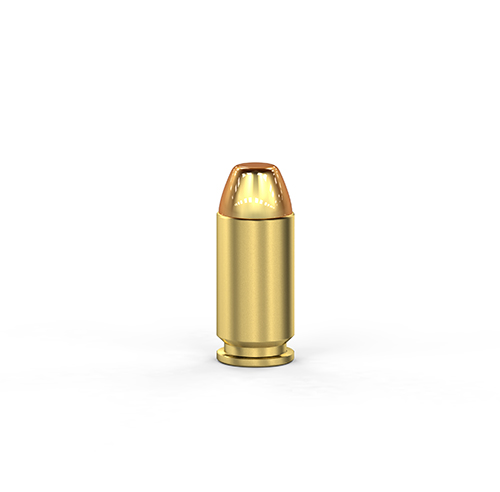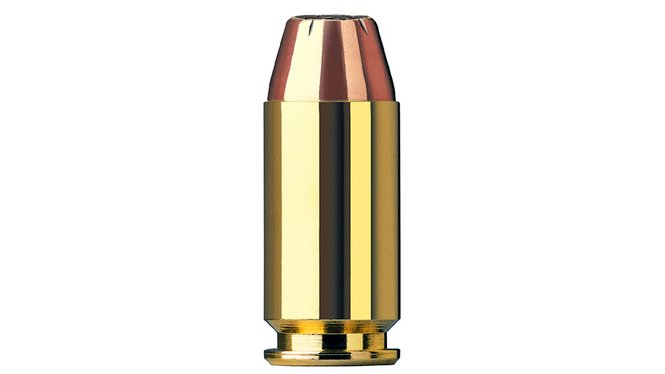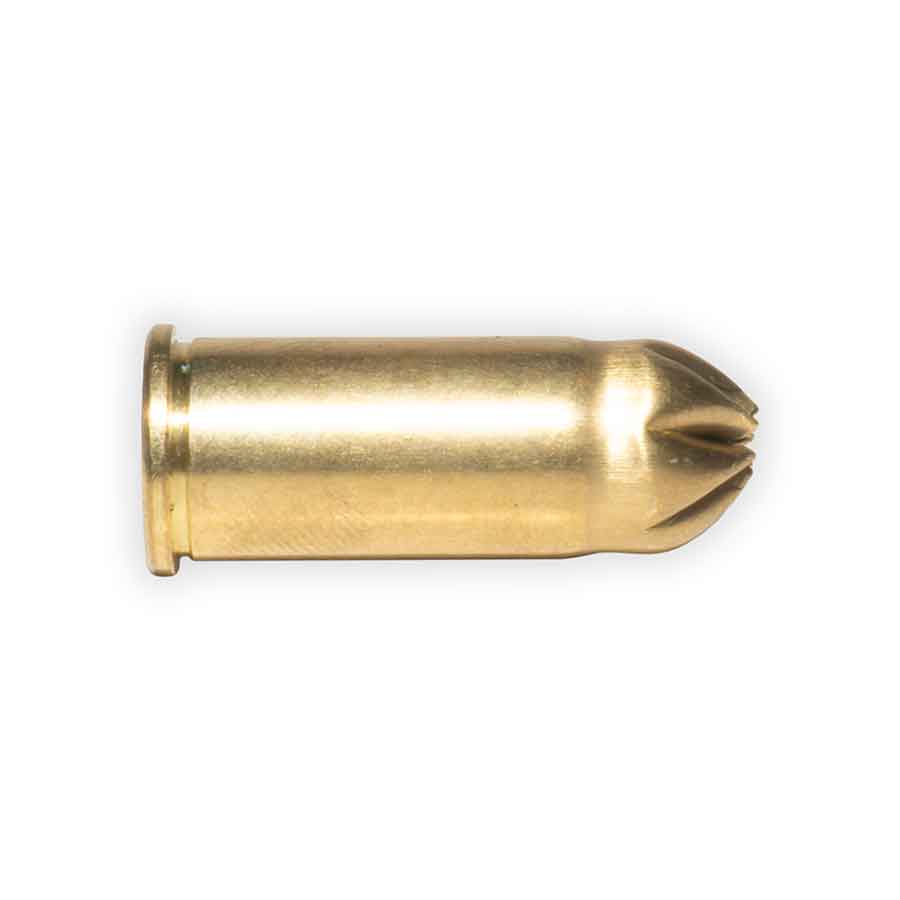
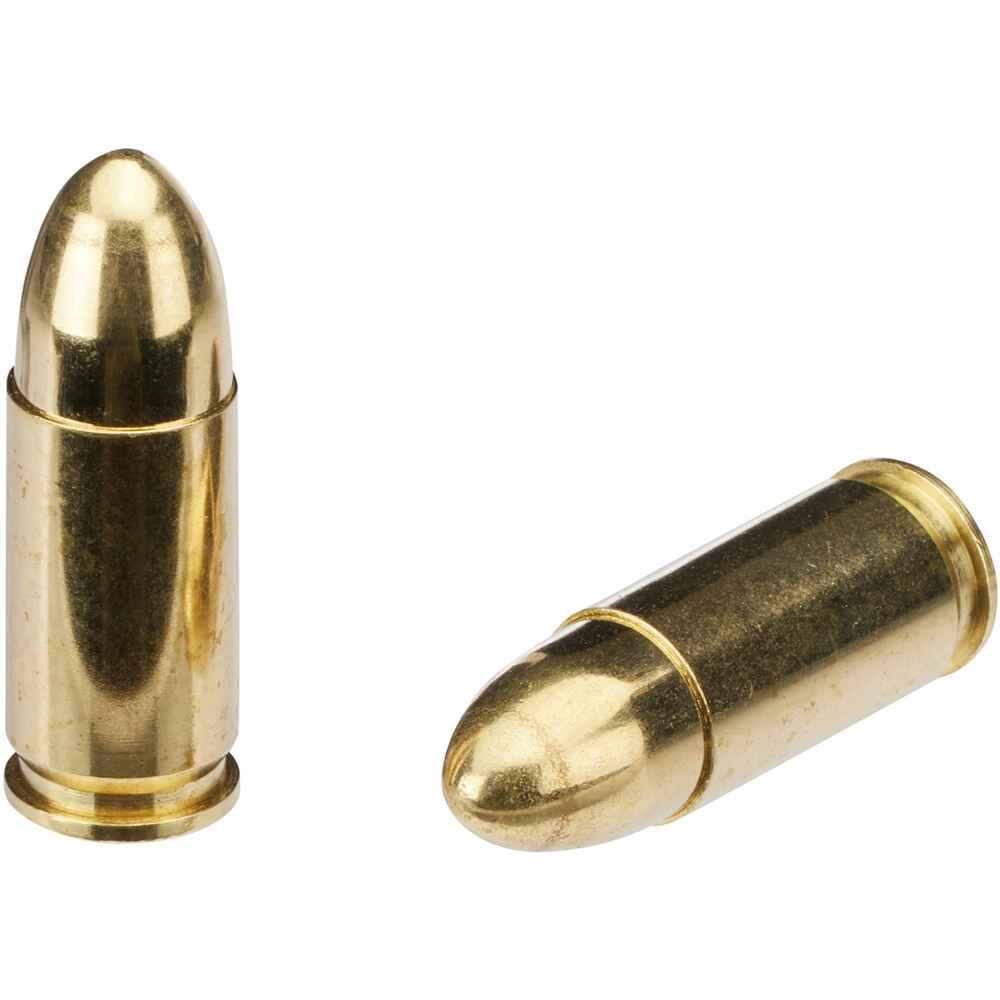
Best price9mm Luger Magtech · 115gr · FMJ · Steel
$11.50Lowest total price
~2-5 business days

Prices last updated Mon, Jun 15
Prices and availability are provided by the retailers and may change. We do our best to keep them current, but always confirm the final price at the store before purchasing.






9mm Luger is the most widely used handgun cartridge in the world and a NATO standard. It is used primarily in sport shooting (IPSC, IDPA, precision shooting) and as a service-pistol cartridge. Its defining traits are outstanding availability, the lowest cost per round of any centerfire caliber, moderate recoil, standard loads of 115–147 grains (7.5–9.5 g), muzzle energy of about 500 J, an effective range from pistols of about 50 meters, and a broad ammunition selection from inexpensive FMJ training rounds to match and subsonic variants. It is available for all common semi-automatic pistols (Glock 17, Walther PDP, CZ P-09, SIG P320, Beretta 92) and increasingly for pistol-caliber carbines (PCCs) with barrel lengths of 300–400 mm for extended precision out to 100 meters.
The 9mm Luger is the most-used handgun cartridge worldwide and a standard pistol caliber for sport shooters. Georg Luger developed it in 1902 for the Parabellum pistol (the Luger P08), and the caliber has not lost any of its strengths since: broad availability, moderate recoil, and an enormous selection of firearms and ammunition keep it the first choice to this day.
The caliber goes by several names: 9 × 19 mm, 9mm Parabellum, 9mm Para, or — in a military context — 9 × 19 mm NATO. Behind each is the same centerfire cartridge, used worldwide in semi-automatic pistols and submachine guns.
The cartridge has a bullet diameter of 9.00 mm and a case length of 19.15 mm. Maximum overall cartridge length per C.I.P. is 29.69 mm. The maximum permitted pressure under the C.I.P. standard is 252 MPa (piezoelectric measurement). Under the SAAMI standard, 35,000 psi is the ceiling for standard loads; the +P variant is rated for up to 38,500 psi.
| Specification | Value |
|---|---|
| Bullet diameter | 9.00 mm |
| Case length | 19.15 mm |
| Overall length (max.) | 29.69 mm |
| C.I.P. pmax | 252 MPa (piezo) |
| SAAMI MAP (standard) | 35,000 psi |
| SAAMI MAP (+P) | 38,500 psi |
The most common bullet weights run from 115 grains (7.45 g) to 147 grains (9.53 g). Three bullet types are most often encountered: FMJ (full metal jacket) for training and sport, JHP (jacketed hollow point) for defensive/service use and controlled-expansion applications, and TMJ (total metal jacket) for reduced-lead-emission use at indoor ranges. Specific muzzle velocities and energies vary considerably by barrel length and load — the respective manufacturer data is the most reliable source.
The NATO note deserves attention: under the designation 9 × 19 mm NATO, the caliber is the standard NATO pistol cartridge. The NATO specification can differ in pressure design from the C.I.P. and SAAMI standards; when combining firearm and ammunition, check the firearm maker's approval.
The effective engagement distance is typically under 5 meters for close-range finishing/control applications and 25 to 50 meters in sport shooting. The answer on range is therefore clear: the 9mm Luger is not a long-distance cartridge but a handgun cartridge for short and medium distances.
As a handgun cartridge, energy falls off noticeably with increasing distance. Barrel length, bullet weight, and the chosen load directly influence muzzle velocity — and therefore how much energy is delivered downrange. The caliber is not designed for shots beyond 50 meters; long-range shooting is simply not applicable here.
For sport use in the IPSC Production class and similar pistol disciplines, distances up to 25 meters are routine, occasionally up to 50 meters. For precise ballistic data on a specific load, the manufacturer's technical data sheets are the most reliable source.
The right ammunition determines reliability, terminal effect, and suitability for the intended purpose. The caliber offers a broad spectrum, from inexpensive training rounds to specialized expanding loads.
FMJ — full metal jacket for training and sport. The most economical choice for training and competition shooting. It does not expand and does not transfer its energy in a controlled way, making it less suitable for applications requiring rapid energy transfer. In sport — whether on the 25-meter range or in an IPSC stage — FMJ is the de facto standard. Typical weights here are 115 and 124 grains.
JHP — expanding bullet for controlled terminal effect and service use. The jacketed hollow point's cavity produces controlled expansion in the target and delivers energy quickly and reliably, so the bullet penetrates more shallowly and predictably — a decisive advantage at very short range. JHP ammunition is also widespread in law-enforcement use. Common weights range from 115 to 147 grains.
TMJ — reduced-lead for indoor ranges. The total metal jacket fully encloses the bullet base, so no lead vaporizes from the base on firing — a requirement at many ventilated indoor ranges. Sintered-core variants without lead in the core also exist, especially in demand where complete lead-free operation is required.
Bullet weights and subsonic variants. The three most common weight classes are 115 gr (7.45 g), 124 gr (8.04 g), and 147 gr (9.53 g). Lighter bullets reach higher muzzle velocities at a given charge, while heavier bullets run more softly and controllably. The 147-grain variant is frequently offered as a subsonic load — the bullet stays below the sound barrier and suits use with a suppressor or simply reduced report on the range.
Lead-free options. For ranges with lead-restriction requirements or for those who prefer reduced-emission ammunition, TMJ or sintered-core loads fully close the bullet base, markedly reducing lead emission on firing.
The 9mm Luger is primarily a sport and service handgun cartridge. As a handgun cartridge, it is not suited to regular rifle-type shots on big game: it does not meet the energy needed for hoofed game at hunting distances, and it is not a choice for large game species.
Its hunting role is narrow and well defined: the finishing/control shot at very close range (typically under 5 meters) during recovery of wounded game. Common loads of the caliber are adequate for this purpose, with JHP loads preferred for their controlled terminal effect. In some contexts the handgun in this caliber is also used to dispatch trapped small predators. Always confirm the applicable local regulations before any field use.
For finishing-shot use with lead-restriction requirements, TMJ or sintered-core loads are a sensible alternative.
The 9mm Luger is primarily a pistol caliber and is chambered in more semi-automatic pistols worldwide than any other caliber.
Common pistol models. Among the most widespread pistols in this caliber are the Glock 17 and the more compact Glock 19 — both polymer-framed and used worldwide in police and sport. The SIG Sauer P226 and SIG Sauer P320 represent metal-frame and polymer-frame concepts respectively and are established in both sport and service use. With the CZ 75 and CZ Shadow 2, the Czech maker offers steel-frame options that are especially popular in IPSC sport. Other notable models include the Walther PDP, Walther PPQ, Heckler & Koch VP9, and Heckler & Koch SFP9. The historical reference model is the Parabellum pistol — the Luger P08, for which Georg Luger originally developed the caliber in 1902.
Pistol-caliber carbines (PCC). Increasingly popular in sport shooting are pistol-caliber carbines: long guns that fire the same ammunition as the pistol. Models such as the Ruger PC Carbine, the CZ Scorpion Evo 3, and various AR-9 platforms use the caliber in barrels of roughly 250 to 420 mm. This segment is growing noticeably in sport shooting.
The caliber's recoil is moderate and easily controllable — a central reason for its lasting dominance in sport shooting. In IPSC Production and comparable pistol disciplines it is the de facto standard. For finishing-shot use with JHP loads, the caliber has been considered reliably proven for decades: the rapid, controlled energy transfer makes the hollow point the preferred choice for that purpose.
The caliber's strengths are obvious. It is technically standardized (C.I.P. pmax 252 MPa, bullet diameter 9.00 mm), available worldwide, and offers a broad load spectrum from light 115-grain FMJ rounds to subsonic 147-grain loads. Add moderate recoil that stays fatigue-free even in intensive training.
The limits are equally clear: as a handgun cartridge it does not meet the energy needed for rifle-type shots on big game, it is not a caliber for distances beyond 50 meters, and it is not a choice for large game species.
For sport shooters in pistol disciplines it is a given: no other caliber combines low cost, broad firearm availability, and established competition rules so well. For sport training, FMJ rounds in the 115- to 124-grain range are recommended; for indoor ranges, TMJ loads are the better choice; and for a suppressed setup, the 147-grain subsonic variant is the fitting complement.
We use cookies to keep the site working and to understand how it's used. Learn more in our Cookie Policy.
77 offers