Best priceRuger Ruger GP100 GP100 (listing)
$629.99Lowest total price
Credova
Ships to FFL · ~1-3 weeks (varies by seller)


Prices last updated Mon, Jun 15
Prices and availability are provided by the retailers and may change. We do our best to keep them current, but always confirm the final price at the store before purchasing.




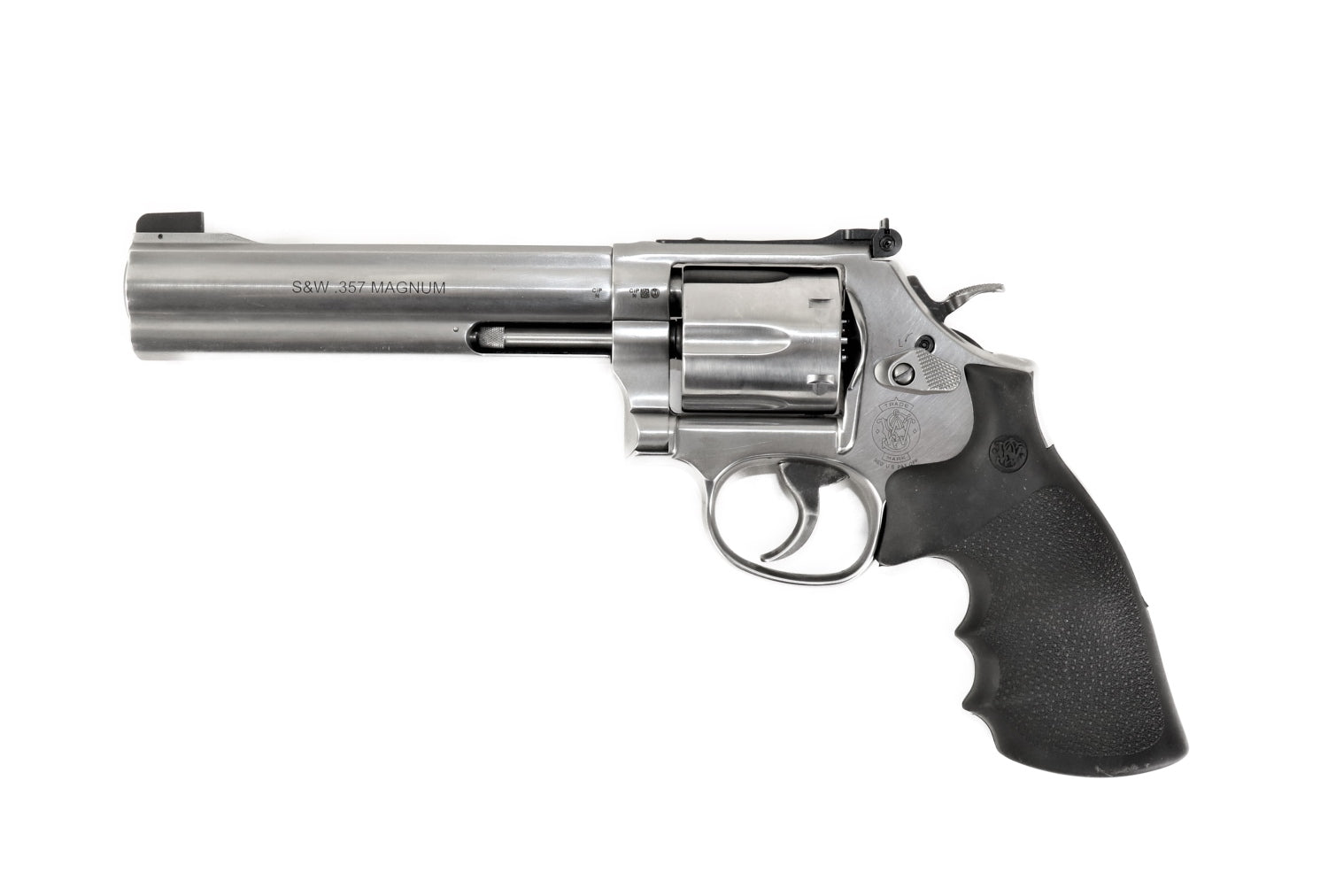
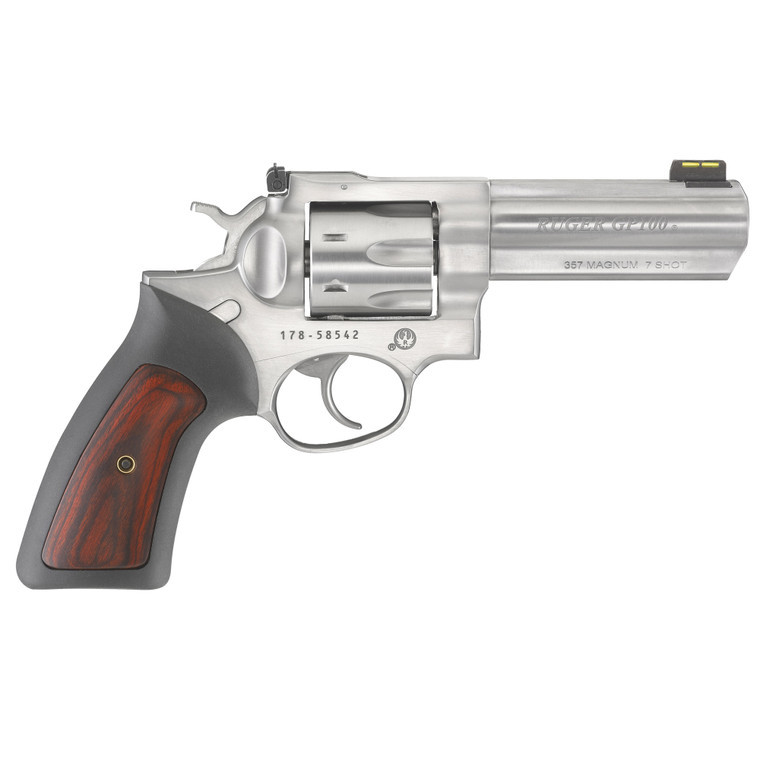
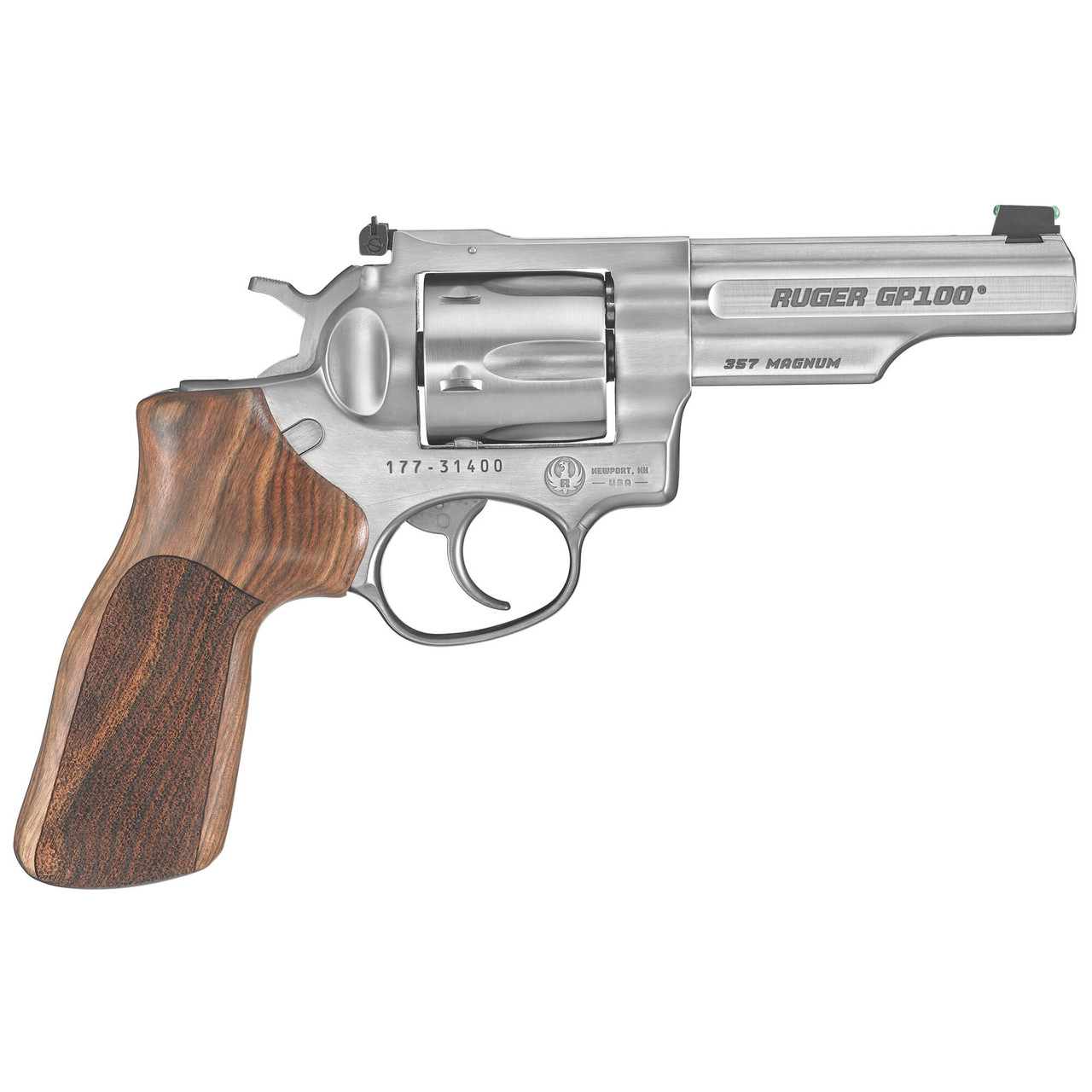
The Ruger GP100 is a rugged double-action/single-action (DA/SA) revolver from the U.S. manufacturer Sturm, Ruger & Co. Available since 1985, it is offered in .357 Magnum (6 rounds), .38 Special, .327 Federal Magnum, .22 LR (10 rounds), and .44 Special. It is built for sport shooting, IPSC revolver disciplines, precision shooting, and hunting use such as follow-up work and the finishing shot. Hallmark features include a triple-locking cylinder for maximum strength, a solid frame with no side plate, a patented transfer-bar safety mechanism, a Hogue rubber Monogrip, adjustable sights, and speedloader compatibility. It is available in barrel lengths of 4 inches (about 1,125 g, compact), 6 inches (about 1,275 g, the classic), and the Match Champion at 5⅛ inches (about 1,400 g) with a Picatinny rail. Its maintenance-friendly modular design requires no special tools.
Sturm, Ruger & Co., founded in 1949 in Southport, Connecticut, is one of the largest firearms manufacturers in the United States, with a strong reputation for rugged, practical firearms at fair prices. Introduced in 1985, the GP100 arrived as a stronger successor to the legendary Ruger Security Six, distinguished by a substantially reinforced construction. Depending on barrel length and variant, it weighs roughly 1,000 to 1,450 g, positioning it as a capable mid-size revolver in the .357 Magnum class.
Its uses span sport shooting, precision competition, and hunting — particularly the finishing shot. Compatibility with .38 Special additionally enables affordable practice shooting. Compared with the Ruger GP100 Match Champion (the competition variant of the line), the standard version represents the classic entry point into the GP100 family. Among its standout design features are the triple-locking cylinder, tool-free disassembly, the patented custom-grip system, and the transfer-bar safety mechanism.
The GP100 is a double-action/single-action (DA/SA) revolver. In double-action mode, a long, smooth trigger pull both cocks the hammer and fires the shot. In single-action mode, the shooter manually cocks the hammer, producing a shorter, lighter trigger pull. This system offers maximum flexibility in use.
Triple-locking cylinder (core feature) The technical heart of the revolver is the triple-locking cylinder, which locks at the front, the rear, and the bottom of the crane. This produces precise, consistent alignment from shot to shot — a meaningful advantage in competition and during rapid strings of fire.
Caliber, capacity, and barrel lengths The .357 Magnum chambering delivers powerful performance at medium ranges. Thanks to backward compatibility, the revolver can also fire .38 Special — a less expensive cartridge that is ideal for regular training. The standard cylinder holds 6 rounds; the Ruger GP100 Model 1773 holds 7. Available barrel lengths range from 51 mm to 152 mm. Shorter barrels of 51–76 mm make the revolver compact and handy — ideal for hunting in dense terrain — while longer barrels from 107 mm increase sight radius and favor precise competition shooting. Weight varies with barrel length between about 1,000 and 1,450 g.
Safety and maintenance The transfer-bar mechanism ensures that the firing pin can reach the cartridge only when the trigger is pulled fully to the rear, reliably preventing unintended discharges from impact or a drop. Tool-free disassembly makes field cleaning and maintenance straightforward. The patented grip frame allows quick changes to custom grips such as Hogue or Pachmayr models — without any special tools. The frame and cylinder are made of stainless steel, ensuring high weather resistance and long service life.
| Feature | Specification |
|---|---|
| Manufacturer | Sturm, Ruger & Co. |
| Model | Ruger GP100 |
| Type | Revolver |
| Action | Double Action / Single Action (DA/SA) |
| Caliber | .357 Magnum (.38 Special compatible) |
| Cylinder capacity | 6 rounds (standard), 7 rounds (Model 1773) |
| Barrel length | 107 mm / 4.2" (other options: 51 mm, 64 mm, 76 mm, 127 mm, 140 mm, 152 mm) |
| Weight (unloaded) | 1,000–1,450 g (depending on barrel length) |
| Grip material | Rubber (standard); wood and custom grips optional |
| Safety | Transfer-bar mechanism |
| Sights | Adjustable rear sight and front sight |
| Material (frame/cylinder) | Stainless steel |
| Notable features | Triple-locking cylinder, tool-free disassembly, patented grip frame |
The GP100 line includes several variants for different requirements; all common configurations are available in stainless steel.
Standard 4.2" — the line's bestseller The standard 4.2" variant is the most widely used configuration and serves as the entry point to the GP100 line. It combines a handy 107 mm barrel with adjustable sights, a 6-round cylinder, and rugged stainless-steel construction, appealing to both practical hunters and recreational shooters who want a reliable, versatile revolver.
Ruger GP100 Match Champion — for competition For shooters focused primarily on competition, the Match Champion offers an optimized trigger over the standard model along with improved competition sights. It is aimed at IPSC and sport shooters who want a directly competition-ready revolver with no need for upgrades.
Ruger GP100 Model 1773 — more capacity for sport The Model 1773 features a 7-round cylinder in .357 Magnum and a 6" (152 mm) barrel. The combination of increased capacity and a long sight line makes it a preferred choice for sport shooters, and the longer barrel further improves accuracy at greater distances.
For those seeking a less expensive alternative from the same maker, the historic Ruger Security Six is worth considering as a used option. As a direct comparison among new revolvers, the Smith & Wesson Model 686 offers a similarly positioned alternative.
Hunting — finishing shot and follow-up work The revolver's primary hunting role is the finishing shot on big game. In .357 Magnum it carries enough energy to dispatch even heavy game cleanly and humanely. Shorter barrel lengths of 51–76 mm make it especially handy in tight cover — a clear advantage during follow-up work with a tracking dog — and a suitable holster for a 4" barrel rides easily on a hunting belt. The .38 Special compatibility pays off here: regular training with cheaper .38 Special keeps skills sharp without straining the budget, and the shooter switches to quality .357 Magnum loads from makers such as Geco or Sellier & Bellot for serious hunting use. The comfortable mid-size frame allows repeated shooting without fatigue, which matters on long training sessions or demanding tracking days.
Sport shooting — competition and precision In the sport arena, the revolver performs well in competition and precision shooting, including IPSC revolver division. The triple-locking cylinder provides consistent shot-to-shot alignment — a decisive factor where precise strings of fire are required. Realistic group sizes at a given distance depend heavily on ammunition, barrel length, and shooter, so controlled testing is the best basis for meaningful comparison. For competition, the Match Champion with its optimized trigger is the clear choice, while shooters who prioritize maximum capacity reach for the Model 1773 with its 7-round cylinder. Inexpensive .38 Special training ammunition helps keep daily practice costs low without changing the familiar handling.
The GP100 has also gained standing as a collectible: with more than 35 years on the market and a history of agency use by specialist units, it has earned a firm place among classic U.S. revolvers.
The revolver enjoys an excellent reputation among shooters and hunters, with consistently positive feedback and no significant documented weaknesses.
Strengths - Triple-locking cylinder: Locking at front, rear, and the bottom of the crane, it delivers consistent results even after many thousands of rounds. - Outstanding reliability: Sources consistently confirm dependable operation; used examples typically show only light wear with clean bores — a testament to the durability of the stainless-steel construction. - Tool-free disassembly: Simple cleaning after hunting days or competition, with no toolkit required — the revolver strips down quickly and completely. - Custom-grip system: The patented grip frame adapts to any hand size, and Hogue or Pachmayr grips install without tools. Comfortable shooting allows repeated firing without fatigue. - Caliber versatility: The same firearm fires both .357 Magnum and .38 Special, significantly lowering training costs.
Limitations - At up to about 1,450 g with the longest barrels, the weight can be noticeable for some hunters carrying it on the belt all day; those who prefer a lighter setup should consider shorter barrels. - Compared with the Match Champion's optimized trigger, the standard variant's double-action pull can feel somewhat heavier, which more demanding competition shooters may notice at longer distances. - No optics rail is fitted from the factory, so mounting a red-dot sight requires an appropriate aftermarket mounting system.
In the .357 Magnum revolver segment, the GP100 occupies a strong middle position against several alternatives: - Smith & Wesson Model 686 (premium alternative): Also offers adjustable sights as standard and represents one of the most storied .357 Magnum revolver lines; a 7-round Model 686 Plus variant exists. Unlike the GP100, it does not feature the triple-locking cylinder. - Colt Python (premium segment): Stands out for high-quality finish and a legendary name. For purely practical hunting or sport use, the GP100 offers comparable reliability at a more accessible price point. - Taurus Tracker 692 (budget segment): Offers a 7-round option in .357 Magnum and works as an entry-level model, though it trails the GP100 in finish quality and the robustness of its long-term construction.
Overall, the GP100 sits between budget options and the premium segment, offering a rugged, reliable .357 Magnum revolver with strong value: the triple-locking cylinder for shot-to-shot precision, tool-free disassembly, and practical .38 Special compatibility. Whether as a finishing-shot revolver on follow-up work, in IPSC competition, or as a dependable sport firearm, it covers a broad range of uses.
Sturm, Ruger & Co. is, by volume, the largest firearms manufacturer in the United States — and it built that position on a simple promise: solid, durable American guns at a fair price. Founded in 1949, Ruger today turns out millions of firearms a year across rimfire and centerfire rifles, revolvers, semi-auto pistols, and precision rifles. For shoppers comparing prices across the dealers on US-GUNDEALS, Ruger is the value-and-versatility brand: rarely the cheapest, rarely the most expensive, and almost always a lot of gun for the money.
Ruger isn't a luxury maker, and it doesn't try to be. Its strength is well-engineered designs, rugged manufacturing, and a model lineup that serves first-time buyers, hunters, and serious competitors alike. Whether you want a .22 to learn on, a hunting rifle, a carry revolver, or a long-range chassis gun, there's usually a Ruger built for it.
We use cookies to keep the site working and to understand how it's used. Learn more in our Cookie Policy.