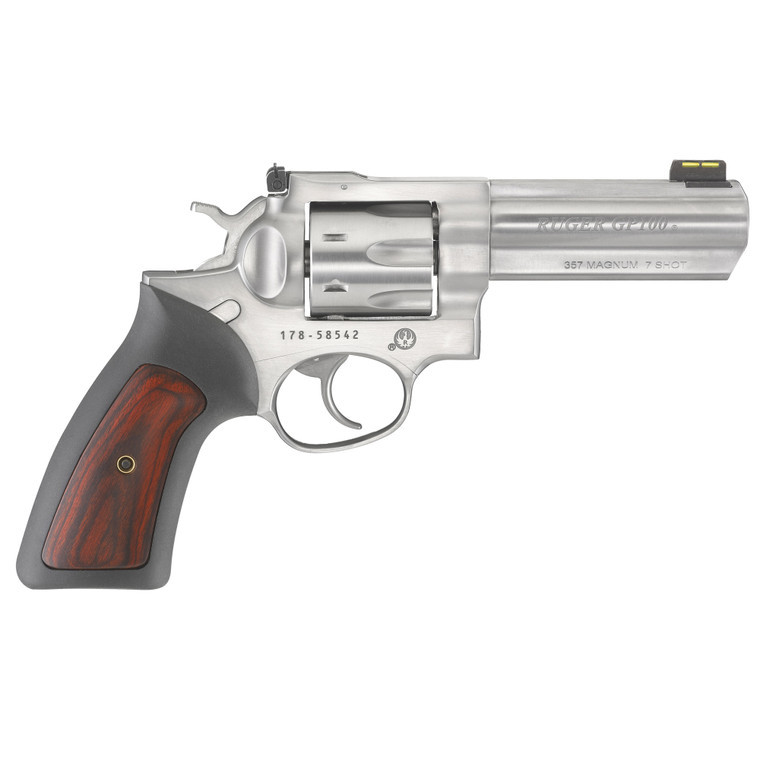
$849.99Lowest total price
Sezzle
Ships to FFL · ~5-9 business days

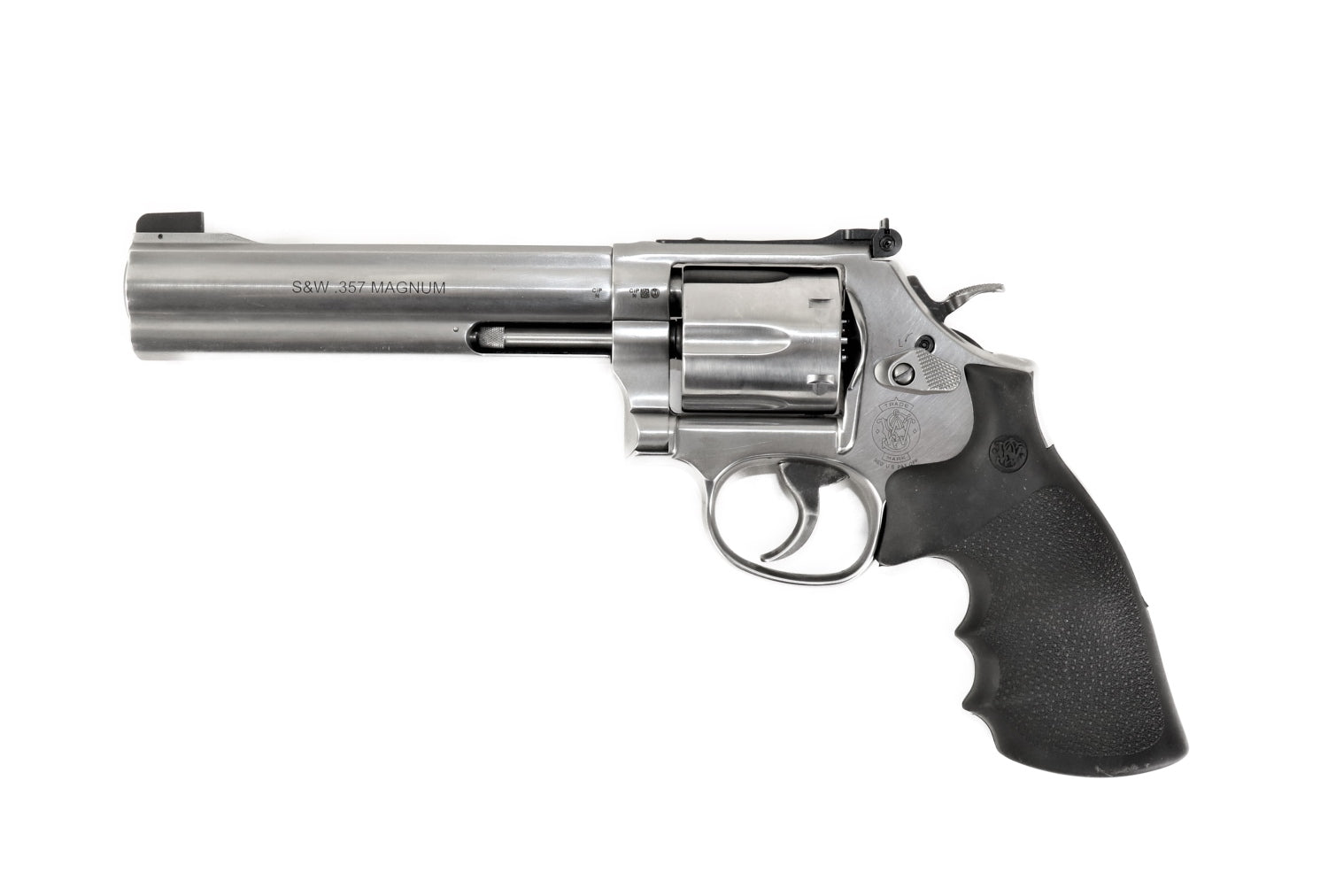
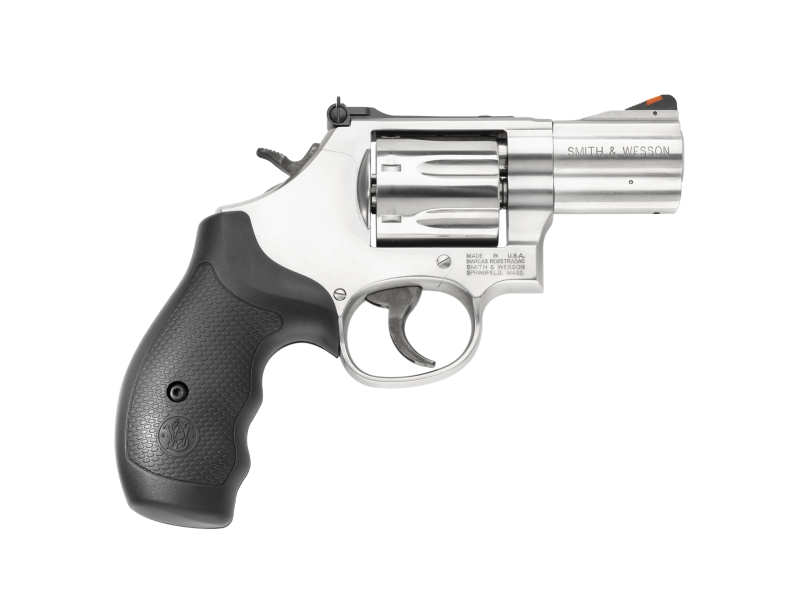

More from Smith & WessonOther Handguns
Prices last updated Mon, Jun 15
Prices and availability are provided by the retailers and may change. We do our best to keep them current, but always confirm the final price at the store before purchasing.






The Smith & Wesson 686 is a rugged double-action/single-action revolver from the American maker Smith & Wesson, chambered in .357 Magnum (also .38 Special), built for sport shooting, hunting, and defense. Its defining features are the reinforced stainless steel L-frame, a 6-round cylinder, adjustable rear sight and front sight, good recoil control from its weight, and ergonomic grip design. The model is available in barrel lengths of 4", 6", and 8 inches and is noted for high corrosion resistance and long-term reliability.
Smith & Wesson, based in Springfield, Massachusetts, is one of the oldest and most respected revolver manufacturers in the world — founded in 1852, with manufacturing that is still regarded as a benchmark for build quality. The 686 was introduced in 1981 as the stainless steel version of the Model 586.
The background was a concrete technical problem: the classic K-frame did not withstand the sustained stress of full-power .357 Magnum loads over the long term without increased wear. Smith & Wesson therefore developed the L-frame — a frame positioned between the K-frame and the larger N-frame, designed specifically for the mechanical demands of the .357 Magnum. This solid foundation carries the 686 to this day, with more than 40 years of market proof since 1981.
The 686 is a SA/DA revolver that combines stainless steel construction on the L-frame, the .357 Magnum / .38 Special +P calibers, and decades of field-proven service.
The single-action trigger breaks at approximately 2,200 g, with a clearly defined break point that allows fine, controlled precision shooting. The double-action trigger is around 5,400 g with a smooth, relatively long pull — typical of Smith & Wesson revolvers and well suited to fast follow-up shots without cocking the hammer.
| Feature | Specification |
|---|---|
| Manufacturer | Smith & Wesson |
| Model | 686 |
| Firearm type | Revolver |
| Action | Double Action / Single Action (SA/DA) |
| Caliber | .357 Magnum / .38 Special +P |
| Cylinder capacity | 6 rounds |
| Barrel length | 64 mm (2.5"), 102 mm (4"), 152 mm (6") |
| Weight (empty) | 983–1,560 g (depending on variant) |
| Grip material | Rosewood (International), rubber (Standard) — depending on variant |
| Trigger weight, SA | approx. 2,200 g |
| Trigger weight, DA | approx. 5,400 g |
| Safety | Integrated internal lock (from 686-6) |
| Sights | Adjustable rear and front sight |
| Frame material | Stainless steel (L-frame) |
| Notable features | Full lug barrel, non-fluted cylinder, matte longitudinal milling on the barrel |
Weight ranges from 983 g in the 2.5" configuration up to roughly 1,560 g in the longer variants, depending on barrel length — from a compact option for a close-range coup de grâce to a steady, low-vibration shooting platform for the sport shooter.
The 686 is available in several variants, each tailored to a different purpose. The differences lie mainly in barrel length, weight, and equipment details.
For hunting use, the 686 2.5" is the first choice. The .357 Magnum delivers sufficient energy for a safe finishing shot on big game. At 983 g empty, the short version is light enough to carry on the body all day without getting in the way. The caliber flexibility also allows practice with cheaper .38 Special +P ammunition at the range, using the identical firearm and handling — saving training cost while keeping familiarity with the revolver.
For precision sport shooting, the 6" variants are the standard. The 686 International, with its 152 mm barrel, offers a long sight radius that favors precise shots at sport distances. The full lug barrel reduces muzzle rise and enables faster target reacquisition after each shot. In revolver disciplines and open handgun shooting, the 686 International is an established choice. Shooters who want to go a step further reach for the 686 Competitor, whose supplemental weights allow the balance point to be tuned to the shooter's stance and the specific discipline.
The 686 offers collectors an additional appeal: it has been in continuous production since its 1981 introduction and is one of the best-known revolvers in the world. Certain production years, early serial numbers, and special models such as the 686-6 Target Champion enjoy steady collector demand.
Strengths - Stainless L-frame construction: corrosion-resistant and extremely durable; the frame holds up to regular full-power .357 Magnum use. - Caliber flexibility: .357 Magnum and .38 Special +P from the same cylinder, enabling affordable training and full power with one firearm. - Precise SA trigger: approximately 2,200 g in single action, fine and controlled — a clear advantage for precision shooting at distance. - Full lug barrel: improved balance and reduced muzzle rise, especially noticeable on the 6" variants. - Adjustable sights: rear and front sight adjust to different loads and distances.
Limitations - Weight: the heavy variants reach up to 1,560 g, which is substantial for a revolver and noticeable when carried all day. - Cylinder capacity: 6 rounds is standard for a revolver but well below the magazine capacities of modern semi-automatic handguns, which can matter in some disciplines. - Internal lock: the integrated safety lock introduced from the 686-6 generation is viewed with mixed opinions in the shooting community; some shooters consider it unnecessary and prefer earlier generations without it.
Thanks to more than 40 years of uninterrupted production and worldwide distribution, the 686 is regarded as one of the best-selling and most field-proven .357 Magnum revolvers of all.
The market for .357 Magnum revolvers offers several relevant alternatives to the 686. Which model fits depends on budget, intended use, and personal priorities.
In short: for a long-lasting .357 Magnum revolver with the best balance of variety and build quality, the 686 is the pick. For maximum prestige, the Colt Python. For budget-oriented entry, the Taurus Tracker 627.
Barrel length largely determines which holster suits the 686. The 2.5" version calls for compact carry holsters — belt or shoulder holsters in the right size. The 4" and 6" variants call for sport-specific holsters designed for range or competition use. Because the L-frame is one of the most widespread revolver frames, many holster makers offer well-fitting solutions.
From the factory, the 686 has an adjustable rear sight and adjustable front sight — adjustable for both elevation and windage — allowing precise zeroing to the chosen load and distance. Matte longitudinal milling on the barrel rib reduces distracting reflections and noticeably improves the sight picture in bright ambient light.
Depending on the variant, Smith & Wesson supplies different grips: the International version comes with high-quality rosewood grips, the standard variants with rubber grips for secure hold even with wet hands. The L-frame is one of the best aftermarket-supported revolver frames. Grip makers such as Hogue and Pachmayr offer numerous alternatives, from ergonomically shaped rubber grips to wooden grips in various woods.
The SA trigger at about 2,200 g has a clearly defined break point for controlled, precise single-action shooting. The DA trigger pulls smoothly at about 5,400 g; the relatively long pull allows fast follow-up shots without cocking the hammer. For further optimization, the 686-6 Target Champion offers a factory tuning solution: its competition hammer eases SA cocking and further reduces the required effort.
The Smith & Wesson 686 is a versatile, durable, and widely available L-frame revolver for sport shooters and hunters. With a broad selection of variants — from the 2.5" compact configuration to the competition-optimized 686 Competitor — and the flexibility to fire .357 Magnum and .38 Special +P from the same firearm, it offers a compelling overall package.
Smith & Wesson is one of the oldest and most storied firearms makers in the world, and one of the few still in continuous production after more than 170 years. The name is practically synonymous with the American revolver — but today the company is just as much a force in striker-fired pistols and modern sporting rifles. For shoppers comparing prices across the dealers on US-GUNDEALS, S&W is a mid-tier brand that spans almost every category, from affordable carry guns to premium Performance Center match revolvers.
The company traces its founding to 1852, and its revolvers have set the standard for sport, duty, and self-defense for generations. Its two pillars today are the legendary revolver lines — the L-frame 686, the big N-frame 629, and the compact J-frames — and the modern M&P (Military & Police) family of polymer pistols and AR-pattern rifles.
We use cookies to keep the site working and to understand how it's used. Learn more in our Cookie Policy.