$739.99Lowest total price
Credova
Ships to FFL · ~5-7 business days

Prices last updated Mon, Jun 15
Prices and availability are provided by the retailers and may change. We do our best to keep them current, but always confirm the final price at the store before purchasing.





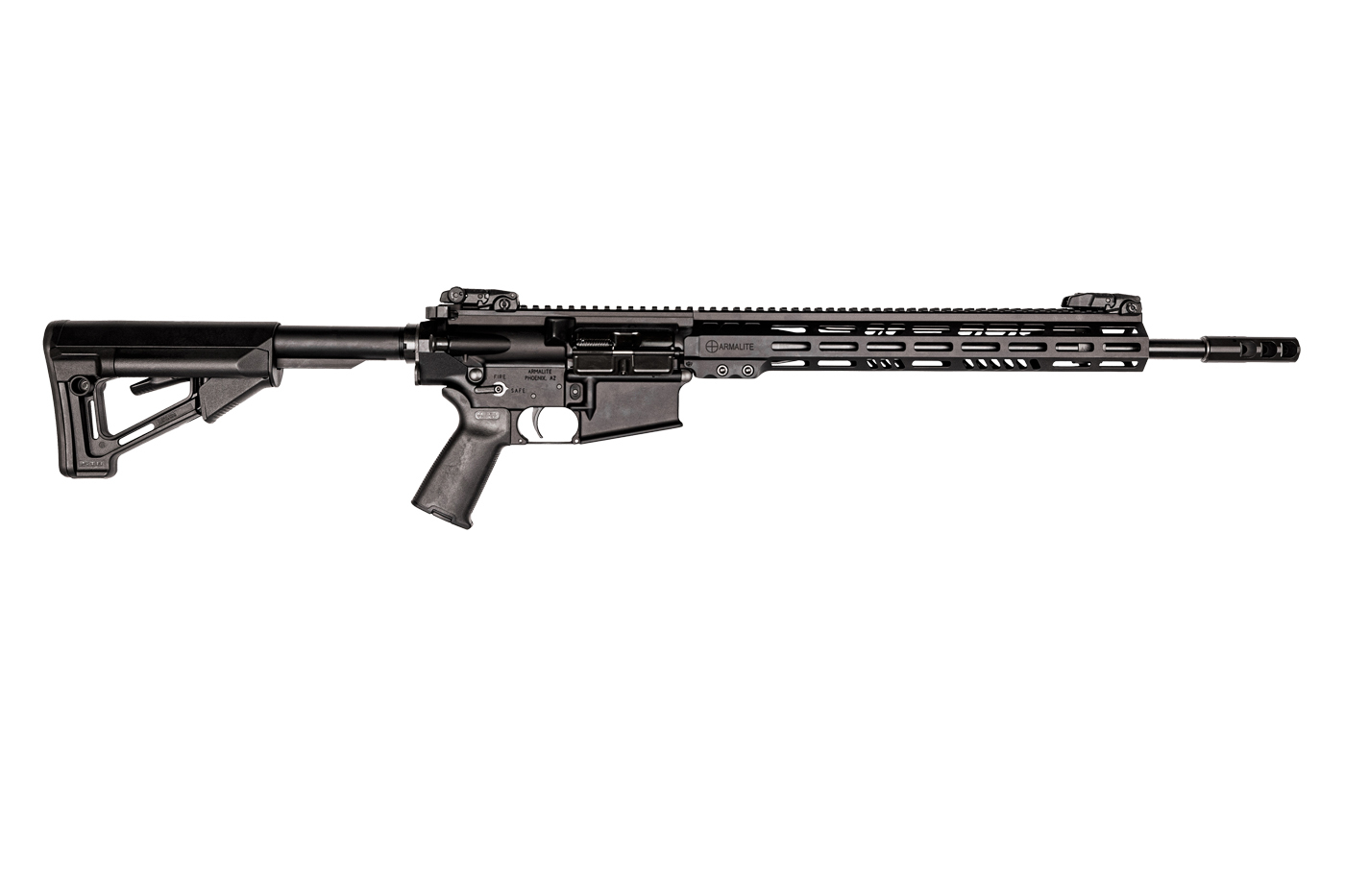
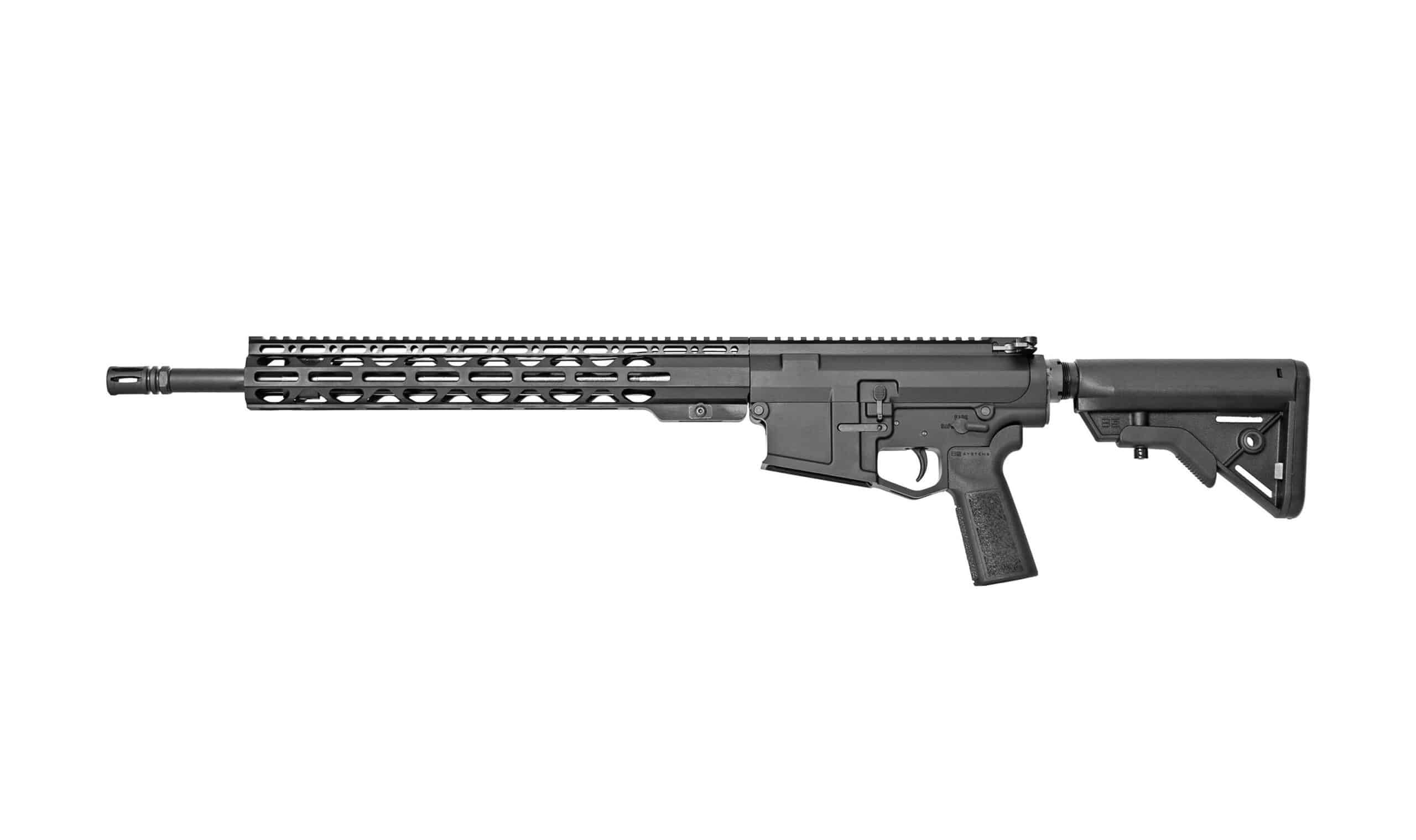
"AR-10" refers both to a specific historical rifle and, in modern American usage, to an entire family of large-frame, AR-pattern semi-automatic rifles chambered in .308 Winchester / 7.62x51mm NATO and similar cartridges. The original ArmaLite AR-10 was a 7.62x51mm battle rifle designed by Eugene Stoner in the mid-1950s; its scaled-down derivative became the AR-15 and ultimately the U.S. military's M16. Today, large-frame ARs built to handle full-power .308-class cartridges are commonly called "AR-10s," even though the name "AR-10" is a registered trademark of ArmaLite, Inc. Because the modern category grew up without a single governing standard, these rifles are split into two principal, largely non-interchangeable receiver patterns — the ArmaLite pattern and the DPMS/SR-25 (LR-308) pattern — which is the single most important compatibility issue for buyers and builders. This entry describes the platform as a category rather than one specific SKU.
The ArmaLite AR-10 was designed by Eugene Stoner and developed by ArmaLite, then a division of the Fairchild Aircraft (Engine and Airplane) Corporation. First prototypes of the 7.62mm AR-10 emerged between 1955 and early 1956, and the rifle was introduced in 1956. It was an innovative design for its day: a lightweight, air-cooled, gas-operated rifle using a straight-line (in-line) barrel-and-stock layout, a forged and machined aluminum-alloy receiver, a rotating-bolt locking system, and phenolic/fiberglass composite furniture. The result was a select-fire battle rifle significantly more controllable in automatic fire and more than a pound lighter than competing infantry rifles of the era. It fed from a 20-round detachable box magazine.
In 1957 ArmaLite licensed AR-10 production to the Dutch firm Artillerie-Inrichtingen (A.I.), which manufactured the rifle and sold it to several militaries in limited numbers. Documented sales include roughly 2,500 rifles to Sudan in 1958 (which kept them in service with special forces into the 1980s) and on the order of 4,000–5,000 to Portugal around 1960, with smaller purchases by other nations. Fewer than 10,000 original AR-10s were built before A.I. ceased production around 1960, so the original rifle was never a commercial mass-market success.
The AR-10's lasting importance is as the parent design of the AR-15. In 1957 ArmaLite rescaled and modified the AR-10 to fire the smaller .223 Remington cartridge, producing the AR-15; ArmaLite sold the rights to both rifles to Colt in 1959, and the further-modified AR-15 (in 5.56x45mm NATO) was adopted as the M16. The "AR" prefix comes from "ArmaLite," the company that originated the designs — not from "assault rifle."
The modern AR-10 is essentially a revival of the name on a new design. In 1995 Mark Westrom acquired the ArmaLite brand, and the company (ArmaLite, Inc.) introduced a new semi-automatic AR-10B series beginning in 1996. Critically, this rifle was not built from the 1950s drawings — it was based on the scaled-up AR-15A2 architecture, enlarged to handle the 7.62x51mm/.308 cartridge. ArmaLite holds a U.S. trademark on the "AR-10" name (in use since January 1996; registered in October 2002), which is why other manufacturers' .308 large-frame rifles are marketed under names like LR-308, SR-25, or simply "AR-10-pattern" rather than literally "AR-10."
A modern .308 AR ("AR-10") works on the same principles as an AR-15 but is built on a larger, heavier receiver set to contain the longer, more powerful 7.62x51mm-class cartridge. The defining practical fact of the category is the absence of a single industry standard, which produced two incompatible receiver/parts patterns.
| Feature | Specification |
|---|---|
| Manufacturer | Many; "AR-10" is an ArmaLite, Inc. trademark. Common makers include ArmaLite, DPMS, Knight's Armament (SR-25), LMT, LaRue Tactical, SIG Sauer, Smith & Wesson, POF, Aero Precision, PSA |
| Model / Pattern | Large-frame AR platform; two main patterns — ArmaLite and DPMS/LR-308/SR-25 |
| Firearm type | Semi-automatic rifle (large frame) |
| Action | Gas-operated, rotating bolt (direct impingement or short-stroke piston) |
| Caliber | .308 Winchester / 7.62x51mm NATO (most common); see chamberings below |
| Capacity | Typically 20 rounds (10/25-round options); pattern-specific magazines |
| Barrel length | Typically 16–20 in (406–508 mm) |
| Gas system | Rifle-length (most common on .308); also mid-length; DI or piston |
| Weight | Roughly 8–10 lb (3.6–4.5 kg) depending on configuration |
| Materials | Forged/billet aluminum receivers; steel barrel and bolt |
| Year introduced | Original ArmaLite AR-10: 1956; modern ArmaLite AR-10B series: 1996 |
The "AR-10" is best understood as two compatibility families plus the historical rifle:
The .308 AR-10 platform bridges the gap between the light-recoiling AR-15 and a traditional bolt-action .308. Its full-power 7.62x51mm chambering makes it well suited to medium- and large-game hunting (where semi-automatic rifles are legal), semi-automatic precision and designated-marksman-style shooting, long-range target work, and tactical/defensive use that calls for more terminal energy and reach than 5.56 NATO. The 6.5 Creedmoor and similar chamberings, on the same large frame, are especially popular for extended-range precision shooting. As with the AR-15, the platform's modularity allows extensive configuration for the shooter's intended role.
We use cookies to keep the site working and to understand how it's used. Learn more in our Cookie Policy.