$17.99$0.90 / roundLowest total price
Sezzle
~3-7 business days

Prices last updated Mon, Jun 15
Prices and availability are provided by the retailers and may change. We do our best to keep them current, but always confirm the final price at the store before purchasing.







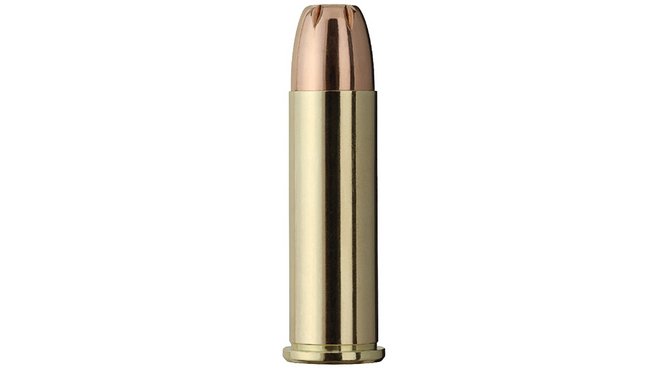
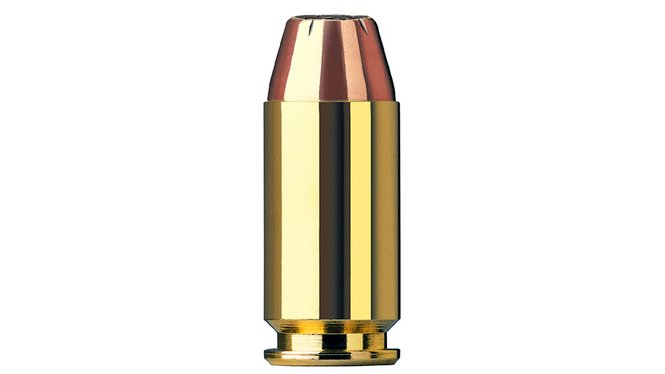
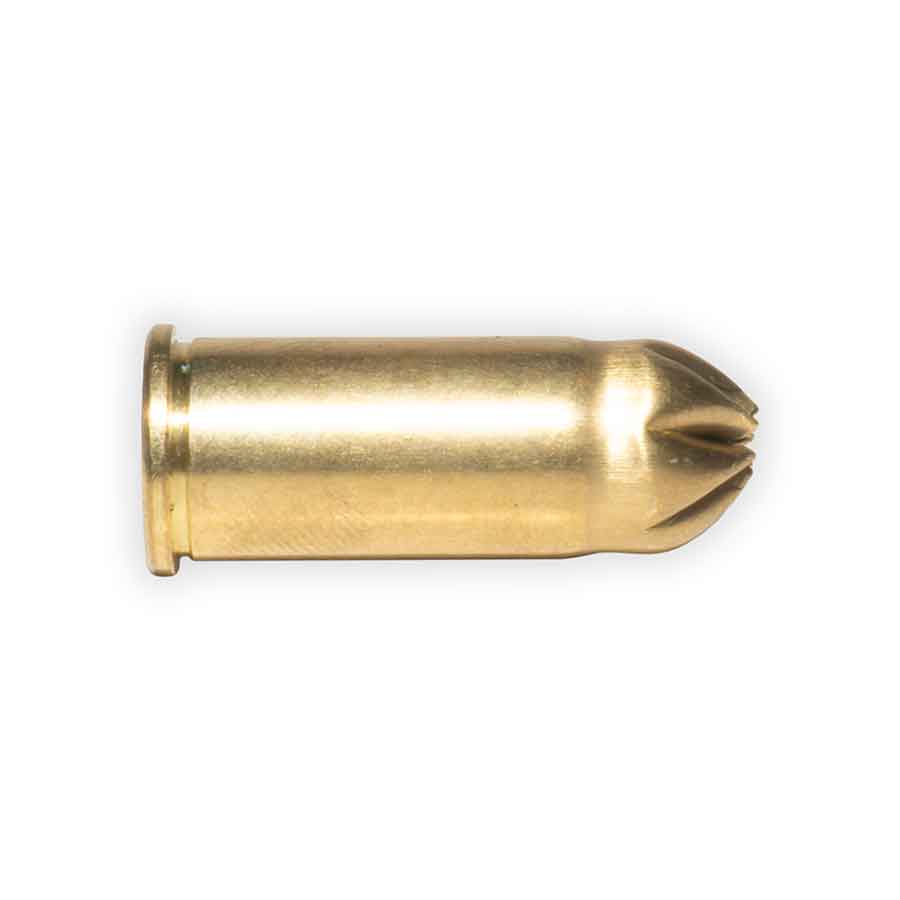
The .357 Magnum is a powerful revolver cartridge with a broad range of uses in sport shooting, as a finishing round, and in certain hunting applications. It is known for high energy, good accuracy, a wide selection of factory loadings, and cross-compatibility with .38 Special for cheaper, lower-recoil practice. Beyond revolvers, the cartridge is also chambered in lever-action rifles, where it delivers additional performance at short to medium range. The .357 Magnum is especially appealing to shooters looking for a versatile, proven, and powerful handgun or lever-action chambering with strong all-around usefulness.
The .357 Magnum is one of the most famous revolver cartridges in the world, and for good reason. It was developed in 1934 by Smith & Wesson and Winchester as a higher-performance evolution of the .38 Special. The relationship is easy to summarize: same bullet diameter, longer case, and significantly higher pressure. The cartridge is also known as the .357 S&W Magnum, or by its metric designation 9x33mmR. It is a centerfire cartridge with a rimmed case, a classic design feature of revolver cartridges.
| Feature | Value |
|---|---|
| Designation | .357 Magnum / .357 S&W Magnum / 9x33mmR |
| Type | Centerfire, rimmed |
| Bullet diameter | 9.07 mm (.357") |
| Max. case length | 32.77 mm |
| Max. overall length (C.I.P.) | 40.00 mm |
| C.I.P. p max | 300 MPa (about 44,000 psi) |
| SAAMI MAP | 35,000 psi (CUP: 45,000) |
| Twist rate | 476 mm (1:18.74"), 6 grooves |
| Typical bullet weight | 158 gr (10.2 g) |
| Muzzle velocity (Yugoimport A-339 FPJ, 12.5" barrel) | 475 +/- 10 m/s (about 1,558 fps) |
| Muzzle energy (calculated) | about 1,151 J |
Pressure standards (C.I.P. vs. SAAMI): Ammunition data sheets list two different pressure figures, 300 MPa per C.I.P. and 35,000 psi per SAAMI. This sounds contradictory but is not. C.I.P. (the European standards body) measures with the piezo method, while SAAMI (the U.S. standard) originally used the copper-crusher method. Both methods capture the same physical event in different ways, and for in-spec ammunition fired in suitable firearms the values are compatible.
The key practical figure: the .357 Magnum typically fires 158-gr bullets (10.2 g) at around 475 m/s muzzle velocity from a 12.5" barrel, producing a muzzle energy of roughly 1,150 J.
The .357 Magnum is designed as a handgun cartridge and, from revolvers with common barrel lengths of 4 to 6 inches (10 to 15 cm), reaches effective ranges at close distance. For sport shooting, distances out to 25 meters are typical, and in competition (for example falling-plate events) sometimes out to 50 meters.
The only manufacturer-documented muzzle figure comes from the Yugoimport A-339 FPJ, 158 gr, from a 12.5-inch test barrel:
| Distance | Velocity | Energy |
|---|---|---|
| Muzzle (12.5" barrel) | 475 m/s | about 1,151 J (calculated) |
At the time of research, no ballistic drop/velocity/energy tables over distance and no ballistic coefficient (BC) value were available for this loading, so a verified table at 50, 100, or 200 meters cannot be produced.
By way of context: revolver cartridges like the .357 Magnum shed energy over distance faster than rifle cartridges, owing to the relatively short, blunt bullet with a low ballistic coefficient. Fired from lever-action rifles (lever guns) with 16- to 20-inch barrels, the .357 Magnum reaches higher muzzle velocities than from short revolver barrels. For precise figures at various distances, refer to manufacturer data from Federal, Hornady, or Sellier & Bellot, or to independent chronograph tests.
The standard bullet weight in .357 Magnum is clearly 158 gr (10.2 g); this loading is documented by manufacturer data and is regarded as the market standard. Beyond that, the .357 Magnum is also generally available internationally in 110 gr, 125 gr, and 180 gr (this reflects general market knowledge rather than the documented research).
Documented loadings in detail:
| Manufacturer | Product | Bullet type | Weight | Use |
|---|---|---|---|---|
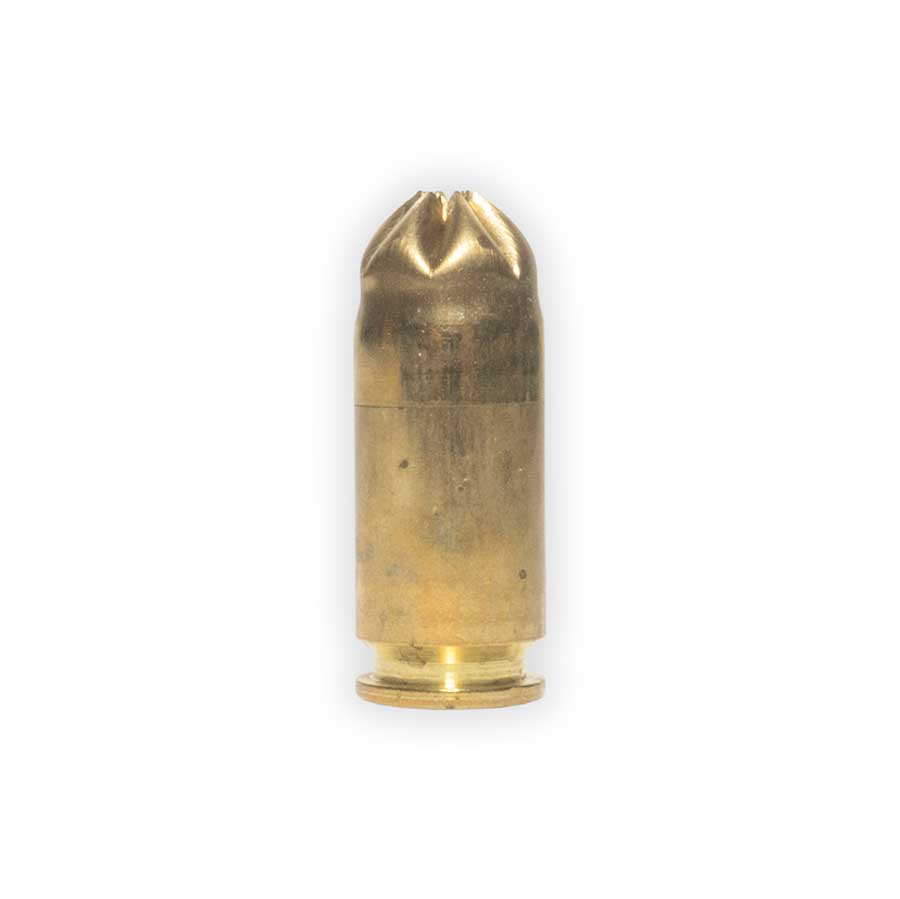
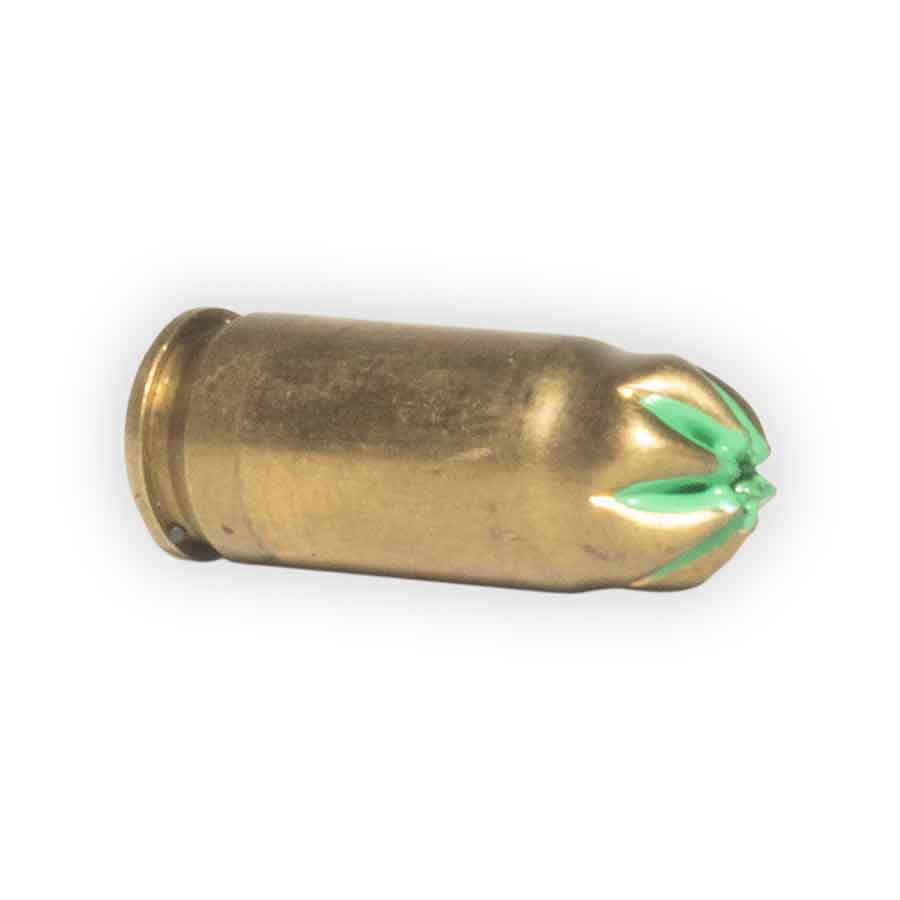
| Yugoimport | A-339 | FPJ (deforming) | 158 gr (10.2 g) | Sport / finishing round |
| Yugoimport | A-338 | SJFP (deforming) | 158 gr (10.2 g) | Sport / finishing round |
A note on bullet nomenclature: with Yugoimport, the product naming departs slightly from common usage. The FPJ (Flat Point Jacketed) is listed as a non-lead deforming bullet, while the SJFP (Semi-Jacketed Flat Point) has a lead/antimony core. Always check the manufacturer's exact product data sheet before purchase to be sure the ammunition meets your requirements.
The market offering is considerably broader than shown here; data sheets from manufacturers such as Sellier & Bellot, Magtech, Federal, Hornady, and Fiocchi cover many additional loadings.
A practical note for sport shooters: .357 Magnum revolvers can also fire .38 Special. Its shorter case, lighter recoil, and lower cost make .38 Special a popular practice cartridge. Many shooters use .38 Special loadings for short-distance competition disciplines.
The .357 Magnum is primarily a revolver cartridge, and that shapes firearm selection. There are essentially two directions: revolvers for classic handgun use, and lever guns (lever-action rifles) as a long-gun alternative.
Revolvers (the original platform): Smith & Wesson developed the .357 Magnum in 1934 and built the first firearms for it; S&W revolvers remain a reference platform. Other well-known makers and models include the Ruger GP100 and SP101, the Colt Python, and various models from Taurus and Dan Wesson. Typical sport-revolver barrel lengths are 4 inches (10 cm) and 6 inches (15 cm), with 6-inch barrels considered the standard for sport shooting. For hunting and silhouette shooting, barrels of 8.375 inches (21 cm) are also used.
Lever guns (more performance from a longer barrel): Lever-action rifles with 16.5- to 20-inch barrels (42 to 51 cm) produce higher muzzle velocities than short revolver barrels thanks to the longer acceleration distance. Well-known models include the Marlin 1894, the Henry Big Boy, and the Rossi R92.
Compatibility and caution: Any .357 Magnum revolver can also fire .38 Special; the shorter case and lower pressure of the .38 Special pose no problem. The reverse is not true: .38 Special firearms are not built for the higher pressures of the .357 Magnum. Semiautomatic pistols are largely unsuitable for the .357 Magnum because the rimmed case is difficult for pistol magazines and feeding systems. Note that the .357 SIG is a completely different cartridge: it is rimless, designed for pistols, and shares nothing with the .357 Magnum except a similar name. Confusing the two can be dangerous.
Recoil from the .357 Magnum is noticeably stronger than from .38 Special, especially from light revolvers under 800 grams with full-power loads. Shooters who train regularly with full Magnum loads should choose a well-fitting, cushioned grip. Beginners are well served starting with .38 Special in the same revolver to get used to the gun and shooting technique. Muzzle flash and report are pronounced, particularly from barrels under 4 inches, so hearing and eye protection are a must, even outdoors.
In sport revolvers with a 6-inch barrel, accurate results at 25 meters are achievable. Revolver cartridges are generally regarded as mechanically reliable because the mechanism does not require feeding from a magazine, a technical advantage over semiautomatic systems.
Both cartridges share the same bullet diameter of 9.07 mm, which is what makes the combination so practical.
| Feature | .357 Magnum | .38 Special |
|---|---|---|
| Bullet diameter | 9.07 mm | 9.07 mm |
| Max. case length | 32.77 mm | Shorter |
| C.I.P. p max | 300 MPa | 121 MPa |
| Muzzle velocity (158 gr, typ.) | 475 m/s (12.5" barrel) | Significantly lower |
| Muzzle energy (calculated, 158 gr) | about 1,151 J | Significantly lower |
| Recoil | Strong | Moderate |
| Compatibility | Requires dedicated firearms | Can be fired in .357 Mag. revolvers |
The strength of the system is its flexibility: a .357 Magnum revolver lets you train inexpensively and with low recoil using .38 Special, then switch to full .357 Magnum performance when needed. The pressure difference is substantial (300 MPa for .357 Magnum vs. 121 MPa for .38 Special), yet both are safe in .357 Magnum firearms because those guns are built for the higher pressure. Shooters who train only with .38 Special should keep in mind the much stronger recoil when switching to full Magnum loads, so regular practice with both is advisable.
A brief note on the .357 SIG: despite the similar name, it is not an alternative to the .357 Magnum. It is rimless, designed for semiautomatic pistols, and cannot be fired in any .357 Magnum firearm.
The .357 Magnum is a proven revolver cartridge with clear strengths: solid muzzle energy (around 1,150 J at 158 gr and 475 m/s), flexibility through .38 Special compatibility, mechanical reliability of revolver designs, and broad usefulness for precision shooting, falling-plate, and similar sport disciplines. Its limits are equally clear: as a handgun cartridge it is built for close range and medium sport distances rather than long range. For shooters with revolver disciplines, and where a powerful handgun or lever-action chambering is wanted, the .357 Magnum is a dependable choice, with the bonus of dual use alongside .38 Special for affordable practice.
We use cookies to keep the site working and to understand how it's used. Learn more in our Cookie Policy.
78 offers