$11.99$0.60 / roundLowest total price
Credova
~3-5 business days + transit

Prices last updated Mon, Jun 15
Prices and availability are provided by the retailers and may change. We do our best to keep them current, but always confirm the final price at the store before purchasing.






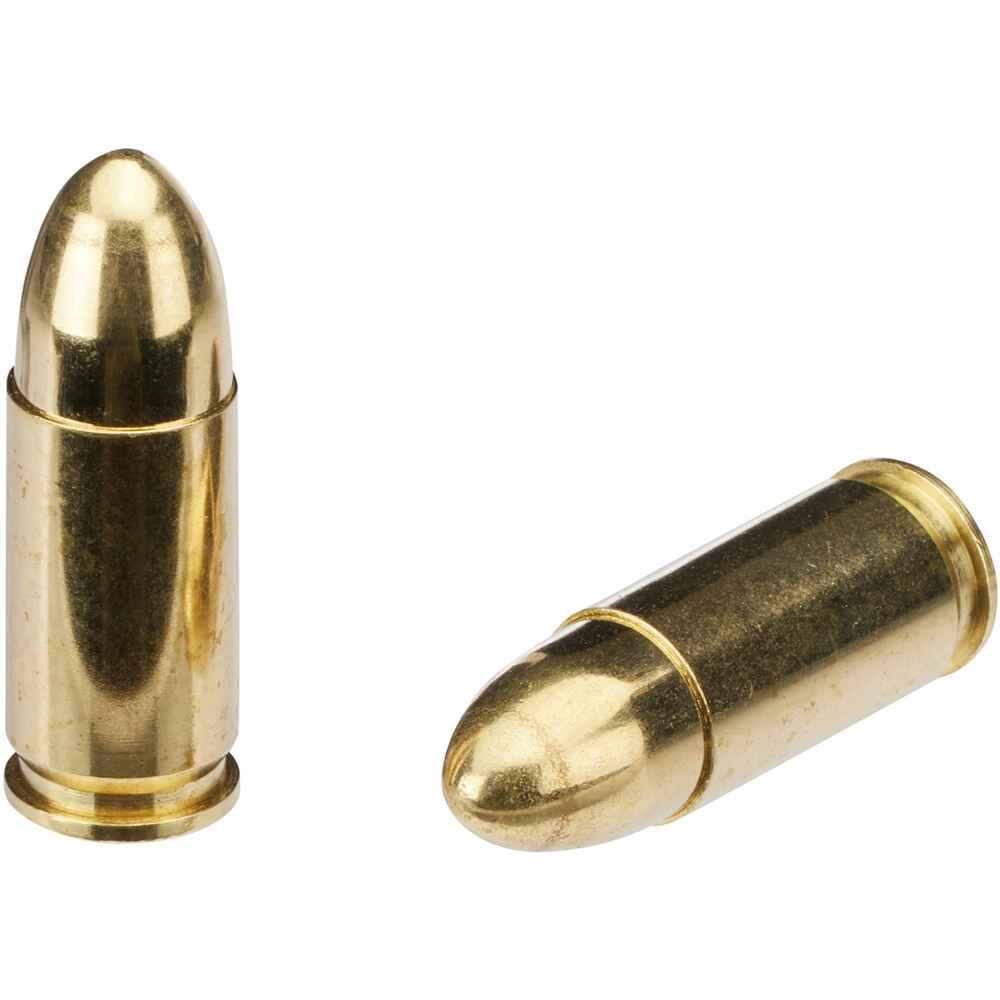
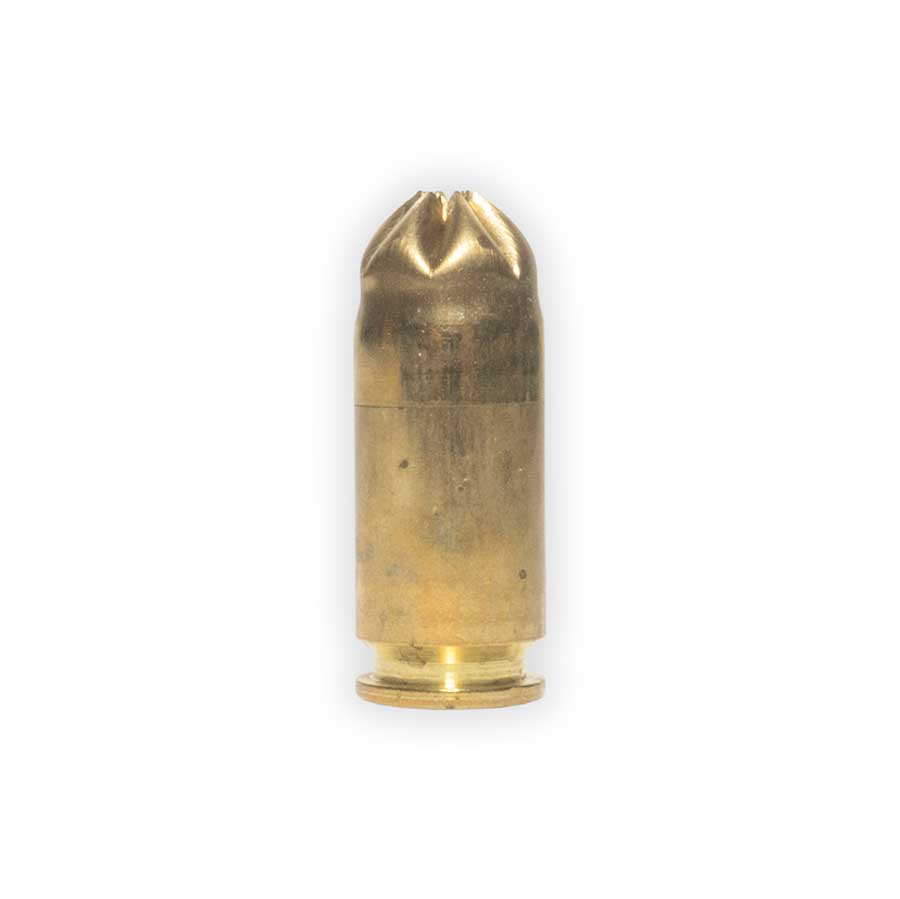
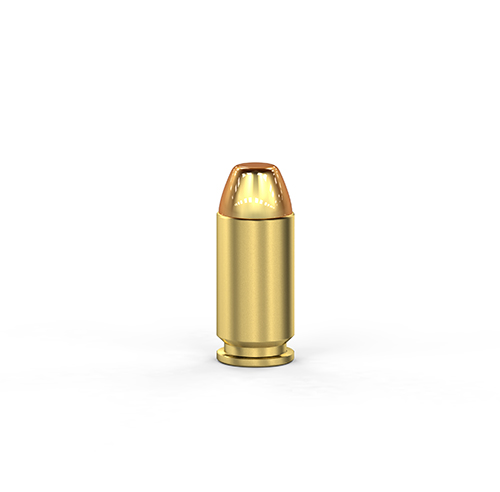
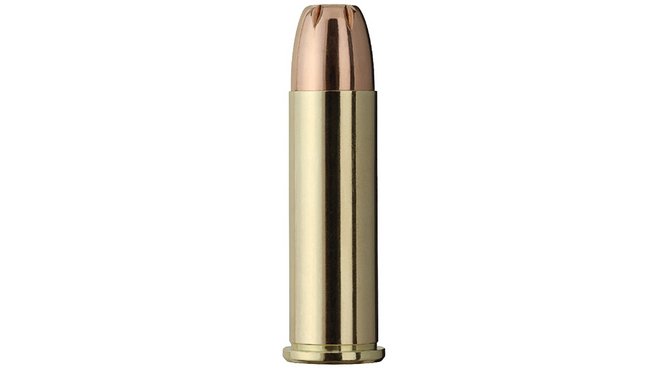
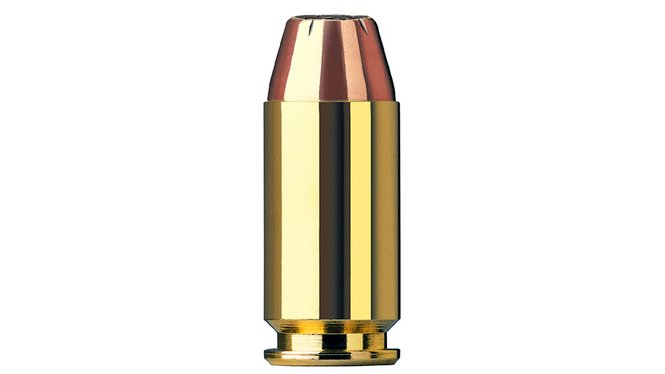
The .380 ACP (also .380 Auto, 9mm Short, or 9mm Browning Short) is a classic pistol cartridge for compact semi-automatic handguns. While larger calibers such as the 9×19mm Parabellum dominate sport and duty use, the .380 ACP fills a very specific role: it is the preferred choice for discreet carry, self-defense, and training. Available loadings include full-metal-jacket round-nose bullets (6.15–6.2 g), jacketed hollow points (5.5–6.2 g) with fast, controlled expansion and near-100% weight retention, and lead-free solid-copper XRG Defense bullets (5.0 g). Typical ballistics run velocities of 290–340 m/s (950–1,115 ft/s) and energies between 259 and 300 Joules (191–221 ft-lbs); lighter bullets give pleasant shooting characteristics, while higher velocity and controlled expansion support reliable terminal performance.
The .380 ACP designates, in metric form, the 9×17mm caliber. In the English-speaking world it is known as .380 ACP or .380 Auto—the abbreviation ACP stands for "Automatic Colt Pistol." Another historical name is 9mm Browning Short, after the American designer John Browning, who developed this caliber in 1908.
The .380 ACP is not designed as a hunting cartridge. It serves instead as a compact, easily carried self-defense and training caliber. The unlocked, blowback (mass-locked) actions in .380 ACP pistols depend on the modest energy level of this caliber to function reliably; more powerful cartridges would overstress such compact handguns.
Technically it is a centerfire cartridge with the following core measurements:
| Specification | Value |
|---|---|
| Metric designation | 9×17mm |
| Ignition type | Centerfire |
| Bullet diameter | 9.04 mm (0.355 in) |
| Case length | 17.33 mm |
| Overall length (max.) | 25.00 mm |
| C.I.P. p-max | 1,350 bar (135 MPa / ~19,600 psi) |
| Common bullet weight | 95 grains (6.16 g) |
| Reference barrel length | 80 mm (e.g., Glock 42) |
The most widely available loadings use a 95-grain (6.16 g) bullet in two main variants: FMJ (full metal jacket) for training and JHP (jacketed hollow point) for self-defense. Lighter loadings down to about 77 grains (5.0 g) exist in lead-free solid-copper form.
Manufacturer figures for muzzle velocity and muzzle energy are not consistently published for this caliber, and ballistic coefficients are likewise not well documented, so precise effective-range statements are difficult to give. The reference barrel length for ballistic testing is 80 mm, as found on the Glock 42.
The .380 ACP is used primarily as a short-range caliber for distances under 25 meters—above all in the self-defense and training context. Without published muzzle velocity and energy values, flight-path tables and energy loss over distance cannot be calculated. For precise ballistic data, consult manufacturers such as Magtech directly, or SAAMI and C.I.P. data sheets with complete load specifications.
Available .380 ACP ammunition centers on two bullet types and one common weight.
Specialized loadings such as match ammunition for precision sport are not common in this caliber. Subsonic variants (reduced muzzle velocity for suppressed firearms) are likewise not widely documented. Major manufacturers such as Hornady, Federal, Sellier & Bellot, Norma, and others may also carry .380 ACP in their lineups.
A key point: without ballistic coefficients (BC), muzzle velocity, and muzzle energy, precise range-specific recommendations cannot be given. The bullet-type information here is based on manufacturer descriptions rather than comparative test data.
The 9×17mm caliber is designed exclusively for semi-automatic pistols with an unlocked blowback action. Bolt-action or single-shot systems do not use .380 ACP. The reason: the blowback action works with relatively low energies and therefore needs the modest pressure level matched to the .380 ACP.
Popular models include:
All of these pistols share very short barrel lengths—typically under 100 mm—to maximize carryability as a defensive sidearm.
As a self-defense and carry caliber, the practical focus of the .380 ACP is on compact firearm design, manageable recoil, and use at very short distances (under 25 meters). Few independent ballistic measurements (muzzle velocity, muzzle energy, group sizes) or gelatin/field tests are publicly documented for this caliber, so detailed accuracy and terminal-performance figures are not widely available. For in-depth testing, sources such as American Rifleman or Guns & Ammo, along with manufacturer gelatin data, are the best references.
Internationally, the .380 ACP is used primarily as a self-defense and training caliber, not as an established precision-sport cartridge like the 9×19mm Parabellum or .223 Remington. Possible competitive applications include dynamic disciplines such as practical handgun shooting, where the caliber is permitted, as well as general training on commercial ranges and private self-defense practice.
A direct comparison between .380 ACP and other calibers is difficult because reliable energy figures and comparative measurements for 9×17mm are scarce. Still, there are obvious alternatives covering similar use cases.
The .380 ACP has established itself over decades as a reliable self-defense and training caliber. Its strengths lie in compact pistol design, low recoil, and practical suitability for short distances under 25 meters. The available bullet types—FMJ for training and JHP for self-defense—cover the most relevant uses. Lighter all-copper defensive loads add a lead-free option.
The .380 ACP is well suited to:
It is not the right choice for precision sport at medium or long distances, or for applications that require fully documented ballistic data.
Key figures for your decision:
For shooters seeking a compact self-defense and training caliber with moderate recoil, the .380 ACP is a practical solution. For more demanding applications, the 9×19mm Parabellum is the established alternative with better availability, more firearm options, and more thorough test documentation.
We use cookies to keep the site working and to understand how it's used. Learn more in our Cookie Policy.
77 offers